A dog friendly entryway can make the difference between muddy paws stopping at the door and that same mess traveling through the rest of your home. Leashes, harnesses, wet towels, waste bags, outdoor gear, and everyday dog supplies can also turn a small entrance into a cluttered space surprisingly quickly.
Fortunately, you don’t need a dedicated mudroom to get things under control. Some of the most effective dog friendly entryway ideas work in surprisingly small spaces. A washable mat, a few well-positioned hooks, compact storage, and a convenient place to clean dirty paws can make your entrance much easier to manage without taking over the room.
The key is to concentrate on what happens immediately before and after a walk. These 10 practical ideas will help you create a cleaner, safer, and more organized entrance while keeping the space comfortable for everyone who uses it.
1. Create a Simple Paw-Cleaning Station
One of the most useful things you can add near the entrance is a designated place for dealing with dirty paws. It doesn’t need to be elaborate. Keep a few clean dog towels and appropriate paw-cleaning supplies close to the door, preferably in a small basket, drawer, shelf, or caddy that you can reach without leaving the entrance.
After a muddy walk, your dog can stop on the mat while you clean and dry their paws before they continue into the house. This small change can be particularly useful when it’s raining because you aren’t searching for towels while your dog walks across the floor leaving wet paw prints behind. The American Kennel Club’s guide to cleaning dog paws recommends checking between the toes and around the paw pads for dirt and debris and drying the paws thoroughly after cleaning.
You also need somewhere for the used towels to go. Instead of dropping damp towels into the same basket as clean ones, designate a separate washable container or place to hang them until they’re ready for laundry. Keep the setup simple. The more steps your paw-cleaning routine requires, the less convenient it becomes when you’re standing at the door with a wet dog.
2. Use a Durable, Washable Entryway Mat
A good entrance mat is one of the easiest ways to contain dirt before it spreads farther into the house. Position the mat where your dog naturally steps when coming through the door. It should be large enough for your dog to stand on comfortably while you remove a leash or wipe their paws.
Look for a mat that is easy to clean and has a backing or design that helps it stay securely in place. A mat that slides across smooth flooring can create another problem rather than solving one. Absorbency can also be useful if your dog regularly comes home wet. If you live somewhere with frequent rain or muddy conditions, consider keeping a second washable mat available. When one is being cleaned or dried, you can put the spare down instead of leaving the entrance unprotected. A mat won’t catch every paw print, but it creates a useful first line of defense. For a broader cleaning routine throughout your home, see How to Keep Floors Clean with Dogs.
3. Choose Easy-to-Clean Flooring
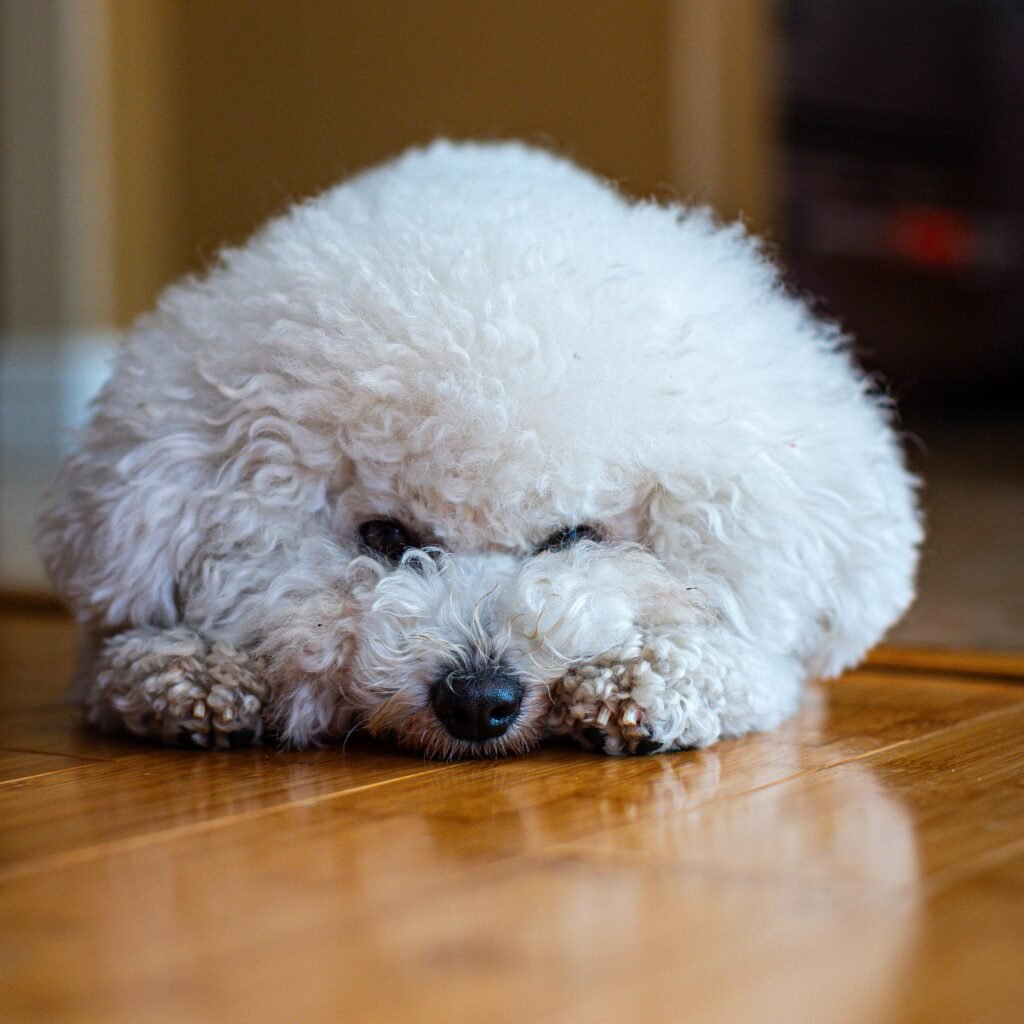
The flooring immediately inside an exterior door has to cope with more than ordinary foot traffic when you have a dog. Rainwater, dirt, grit, muddy paws, and regular cleaning can all take their toll, so this isn’t the ideal place for a delicate surface that requires constant attention.
If you’re replacing the flooring, options such as tile or suitable vinyl can be worth considering because they’re generally practical for areas where dirt and moisture regularly enter the home. Whatever material you choose, think about durability, moisture resistance, traction, and how easily the surface can be cleaned. You don’t necessarily need to replace an existing floor simply because you have a dog. A well-positioned washable mat and a consistent paw-cleaning routine may be enough to protect an entrance that’s already functioning well. If you’re planning new flooring or comparing materials, our guide to Best Flooring for Dogs takes a closer look at the options.
4. Give Leashes and Walking Gear a Home
Leashes are much easier to manage when they have one permanent home near the door. Wall-mounted hooks are particularly useful because they take advantage of vertical space instead of adding another basket or piece of furniture to the floor. You can use them for everyday leashes and harnesses, while a nearby drawer or small container holds waste bags and other walking essentials.
If you have multiple dogs, consider giving each dog’s gear its own hook or section. That way, everyone in the household knows exactly where the equipment belongs when a walk is over and where to find it next time. Be thoughtful about placement. Hanging leashes shouldn’t obstruct the doorway, become a trip hazard, or hang where a dog that likes to chew can easily pull them down. For more ways to organize walking gear, see our Dog Leash Storage Ideas.
5. Use Vertical Storage in a Small Entryway
A small entrance can become crowded very quickly, so don’t assume every storage solution needs to sit on the floor. Wall hooks, narrow shelving, wall-mounted organizers, and taller storage units can provide useful space without making the walkway narrower. The aim is to keep frequently used dog supplies accessible while preserving a clear path through the entrance.
Think carefully about what actually needs to be in that space. Leashes, waste bags, clean towels, and a few paw-cleaning supplies make sense because you use them as you’re coming and going. A large collection of toys, spare bedding, bulk food, and grooming equipment may be better stored elsewhere. Keeping only high-use items at the entrance prevents your storage system from becoming another source of clutter. Baskets can still be useful, especially on a shelf or inside a cabinet. Just avoid lining the floor with containers that everyone has to step around.
6. Create Separate Storage for Dog Towels
Dog towels deserve their own system, particularly during wet weather. Keep clean towels close enough to the entrance that you can grab one without leaving your dog standing unattended at the door. A drawer, shelf, basket, or small cabinet can all work. Then create a separate place for wet and dirty towels. Don’t immediately bury a damp towel underneath clean supplies in a closed basket. Give it somewhere appropriate to hang or dry until you’re ready to wash it.
Separating dog towels from household bath and kitchen towels also makes everyday organization easier. Everyone knows which towels can be grabbed after a muddy walk, and clean dog towels are less likely to disappear into another part of the house. If you’re short on storage space, our Dog Towel Storage Ideas include several practical ways to organize both clean and used towels. You may also want to keep frequently used brushes or other appropriate grooming tools nearby. For supplies that don’t need to stay at the door, see Where to Store Dog Grooming Supplies.
7. Add a Dog Resting Spot Only If Space Allows
A dog bed can look cozy in an entrance, but it isn’t necessary for every home. In a wide entryway with an unused corner, a washable dog bed or mat may provide a comfortable place for your dog to settle. But in a narrow entrance, adding a bed can make the area harder to walk through and more difficult to clean.
Function should come before appearance. If you do decide to add a resting spot, keep it away from the swing of the door and the main walking path. Your dog shouldn’t be lying somewhere that forces people to step over them whenever they enter or leave. The area should also stay reasonably dry. Placing a bed beside wet shoes or directly next to the paw-cleaning zone means you’ll probably be washing it much more often than necessary. For dogs whose beds move around on smooth surfaces, see How to Stop a Dog Bed Sliding on Hardwood Floors.
8. Protect Walls From Mud and Scratches
Floors aren’t the only surfaces affected by a dog coming through the entrance. A wet coat can brush against a wall, a muddy tail can leave marks, and an excited dog may put their paws against the door or surrounding surfaces. Start by making the highest-contact areas easier to clean. A durable, washable wall finish can be particularly helpful beside the exterior door and around the area where you usually clean your dog’s paws.
Wipe muddy marks away before they’re repeatedly rubbed into the surface. If one section of wall gets dirty far more often than the rest, concentrate your protection there rather than redesigning the entire entryway. For entrances where muddy walls are an ongoing problem, our guide to How to Protect Walls From Muddy Dogs covers practical options in more detail.
9. Make the Entrance Safer for Your Dog
Organization shouldn’t come at the expense of your dog’s safety or the safety of others. Take a look at the entrance from your dog’s level. Cleaning products, medications, sharp tools, dangling cords, unstable storage, and other potentially hazardous items shouldn’t be within easy reach.
The ASPCA advises using household cleaning products according to their label directions. Its guide to poisonous household products also explains that potentially harmful products should be managed carefully around pets. Floor safety matters too. Secure mats that tend to move and avoid creating cluttered pathways where your dog or a person could trip. Pay attention to the exterior door as well, particularly if your dog gets excited when visitors arrive. Your setup shouldn’t interfere with your ability to open and close the door securely. The safest entrance is usually also the simplest: a clear path, secure storage, stable surfaces, and nothing hazardous sitting where a curious dog can investigate it.
10. Keep the Space Simple and Clutter-Free
A dog-friendly entrance still needs to feel like part of your home. You don’t need paw-print signs, dozens of labeled containers, or specialized furniture everywhere to make the space work for your dog. Often, a simpler approach looks better and is easier to maintain. Choose a few storage pieces that suit the room and give everyday dog supplies a specific place.
If your home has a neutral color palette, continue it through the entrance. Baskets, hooks, cabinets, and mats can coordinate with the rest of your decor rather than making the area look like a separate pet-storage room. Closed storage is particularly useful for items you need nearby but don’t necessarily want on display.
Before buying another organizer, ask yourself whether you could remove something instead. The best dog-friendly entryway ideas solve real problems. If an item doesn’t make walks, cleanup, storage, or everyday movement through the entrance easier, it may not need to be there.
Dog-Friendly Entryway vs. Dog-Friendly Mudroom
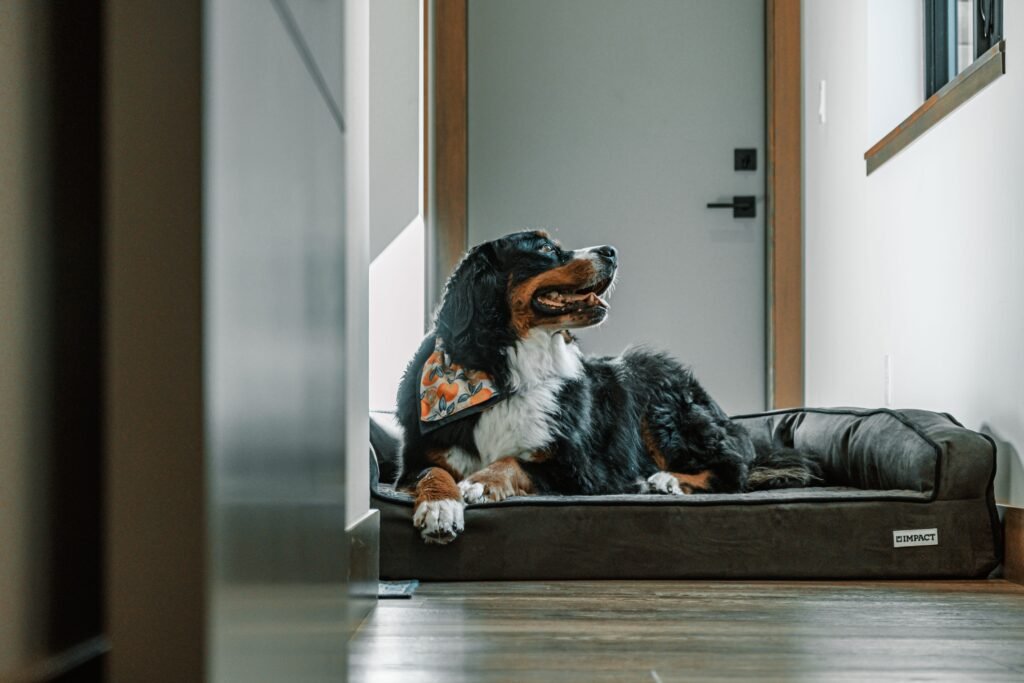
A dog-friendly entryway and a dog-friendly mudroom solve many of the same problems, but the amount of available space changes what you can realistically include. An entryway is usually part of the main entrance to the home. It may be narrow or open directly into another living area, which means storage needs to be compact and the walkway needs to remain clear. A mudroom is typically more of a dedicated transition space. Depending on its size, it may have enough room for larger cabinets, a storage bench, a dog bed nook, or even a built-in dog-washing station.
For a small entryway, prioritize the essentials: a good mat, leash storage, towels, and a simple paw-cleaning setup. If you have a separate room and want to create a more complete dog-care zone, our Dog-Friendly Mudroom Ideas guide covers that setup in more detail. The distinction is useful because you don’t need to squeeze mudroom features into an entrance that simply doesn’t have the space. Work with the area you actually have.
A Simple Entryway Routine That Works
A good entrance becomes much more effective when everyone follows roughly the same routine. After a walk, have your dog stop on the entrance mat instead of immediately continuing through the house. Remove the leash or harness, check whether their paws need cleaning, and use the towels or supplies you’ve stored nearby.
Hang the walking gear in its designated place. Wet towels should go to their drying or laundry area rather than onto the floor. Waste bags and other supplies can be replenished when they’re running low, so you’re not discovering an empty container just as you’re heading outside. This routine doesn’t need to be rigid. Its purpose is simply to deal with outdoor mess at the point where it enters your home. When the storage and layout support that routine, keeping the entrance organized requires much less effort.
Frequently Asked Questions About Dog Friendly Entryways
How do you make a small entryway dog-friendly?
Start by keeping the floor as clear as possible. Use wall-mounted hooks for leashes and harnesses, a compact washable mat by the door, and vertical or narrow storage for the few dog supplies you use every day. Don’t try to store everything your dog owns in the entrance. Keeping only walking and cleanup essentials there will make a small space much easier to use.
What should you keep in a dog-friendly entryway?
The most useful items are generally the things you need immediately before or after a walk: your dog’s leash or harness, waste bags, clean towels, and appropriate paw-cleaning supplies. Depending on your routine, you might also keep a brush or other frequently used accessory nearby. Bulk food, spare bedding, toys, and less frequently used supplies can usually be stored elsewhere.
How do you keep a dog-friendly entryway from smelling?
Moisture is one of the first things to address and eliminate. Don’t leave damp towels, wet harnesses, or dirty mats sitting in enclosed storage. Allow wet items to dry appropriately, wash reusable fabrics regularly, and clean dirt from the floor and other surfaces before it accumulates. Keeping the area uncluttered also makes routine cleaning much easier.
How can I keep my entryway clean during rainy or muddy weather?
Put a washable mat where your dog first steps inside and keep clean towels and paw-cleaning supplies close to the door. Have your dog pause there while you deal with wet or muddy paws rather than letting them walk through the house first. Give wet gear and dirty towels somewhere appropriate to go afterward. For particularly muddy households, our guide on How to Keep Your Entryway Clean With a Muddy Dog goes deeper into managing this specific problem.
What is the easiest dog-friendly entryway upgrade?
For most homes, start with the combination of a good washable mat, dedicated leash hooks, and clean towels stored close to the door. Those three changes address several of the most common entryway problems without requiring construction, new furniture, or much additional space.
Conclusion
create an entryway around the way you live. The best dog friendly entryway ideas aren’t necessarily the most elaborate ones. They’re the changes that make leaving the house and coming home with your dog simpler. Start with your biggest problem first. If muddy paw prints are spreading through the house, build a better cleanup routine at the door. If leashes are always missing, create one permanent storage spot. If wet towels are piling up, give clean and used towels separate places.
Once those basics work, you can decide whether you actually need additional baskets, shelving, wall protection, or a dog resting area. Even a small entrance can work well when every item has a purpose and the pathway stays clear. The goal isn’t to turn your entryway into a dedicated dog room. It’s to create a practical transition between the outdoors and the rest of your home so that living with a dog feels a little more organized and a lot easier to clean.