Dog leashes have a habit of ending up everywhere: on the kitchen counter, draped over a chair, dropped beside the front door, or tangled together in a basket. Giving them a dedicated storage spot makes getting ready for a walk quicker while keeping everyday dog gear from taking over your entrance.
The best dog leash storage ideas don’t require a large mudroom or an expensive organizer. A few well-positioned hooks, a small basket, an unused closet door, or a narrow wall-mounted shelf may be all you need. The important thing is to store the leash close to the door you actually use for walks and make the system easy enough that everyone puts the gear back afterward.
Below are 10 practical ways to organize leashes, harnesses, waste bags, and other everyday walking supplies, including options for small apartments and multi-dog homes.
1. Hang Dog Leashes on Wall Hooks
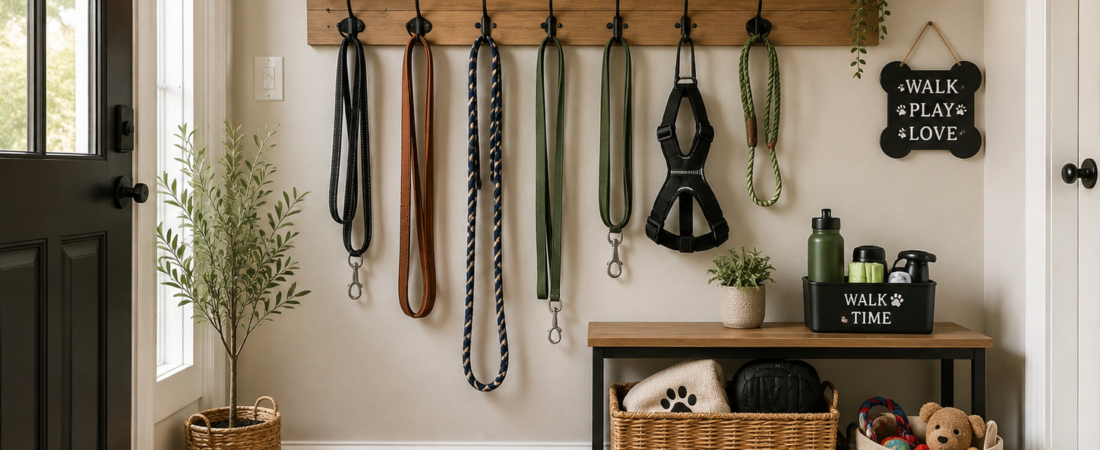
Wall hooks are one of the simplest ways to organize the leashes you use every day. Position them near the door you normally leave through for walks so the leash is easy to grab on the way out and just as easy to put away when you return. Instead of hanging several leashes from one hook, give frequently used items enough space to hang separately. This prevents clips, handles, and harness straps from becoming tangled.
Choose the hook according to what it needs to hold. A lightweight leash doesn’t require the same support as several heavy leashes, harnesses, or other walking equipment. Whatever style you choose, install it according to the manufacturer’s instructions and make sure the wall and fixing method are appropriate for the expected weight.
In a multi-dog household, a row of separate hooks works particularly well because each dog’s leash and harness can have a permanent place. It removes the need to untangle several sets of walking gear every time someone heads for the door.
Best for: everyday leashes, small entryways, and multi-dog households.
2. Use an Over-the-Door Leash Organizer
When wall and floor space are limited, the back of a suitable door can provide useful storage without taking up any additional room. An over-the-door organizer with hooks or pockets can hold leashes, lightweight harnesses, waste-bag rolls, and other small items you regularly take on walks.
The advantage is that everything remains together but doesn’t have to be permanently visible in the entrance. An organizer with several separate pockets also prevents small supplies from disappearing underneath larger pieces of gear. Keep the everyday leash in the easiest position to reach and use the other compartments for lighter or less frequently used items.
Before choosing this option, check that the organizer doesn’t interfere with the door closing properly and that it won’t swing or knock against the door whenever it’s opened. A simple system that stays securely in place will be much less frustrating to use every day.
3. Store Dog Leashes in a Basket by the Door
A basket is a good alternative if you don’t want to install anything on the wall. Place it beside the door, underneath a console table, or under an entryway bench so leashes remain close to your normal walking route without becoming part of the general household clutter.
The main drawback of basket storage is tangling. Instead of dropping every leash into one pile, loosely coil each one before putting it away. If you’re storing harnesses and other walking supplies in the same basket, use dividers or smaller containers inside it to create separate sections. This makes it much easier to grab one leash without pulling everything else out with it.
Basket storage works particularly well for renters or anyone who wants a flexible setup that can be moved later. Just avoid choosing a basket that’s much larger than you need, because oversized containers have a tendency to become dumping grounds for unrelated items.
4. Add Hooks Inside a Closet Door
If you want your walking gear accessible but out of sight, the inside of a nearby closet can be an excellent place for leash storage. A few appropriately installed hooks can keep leashes and lightweight harnesses separated without adding visual clutter to the entryway.
This is particularly useful in a small entrance where open wall space is limited. Arrange the hooks so the gear hangs freely rather than overlapping and make sure clips or buckles won’t become trapped when the door closes. Before installing anything, check the thickness and construction of the door and follow the hook manufacturer’s instructions.
The biggest consideration is convenience. A closet that’s several rooms away from the door you use for walks probably won’t work as well as one directly beside the entrance. The most successful dog leash storage ideas are usually the ones that fit naturally into your existing routine.
5. Use a Small Entryway Shelf With Hooks
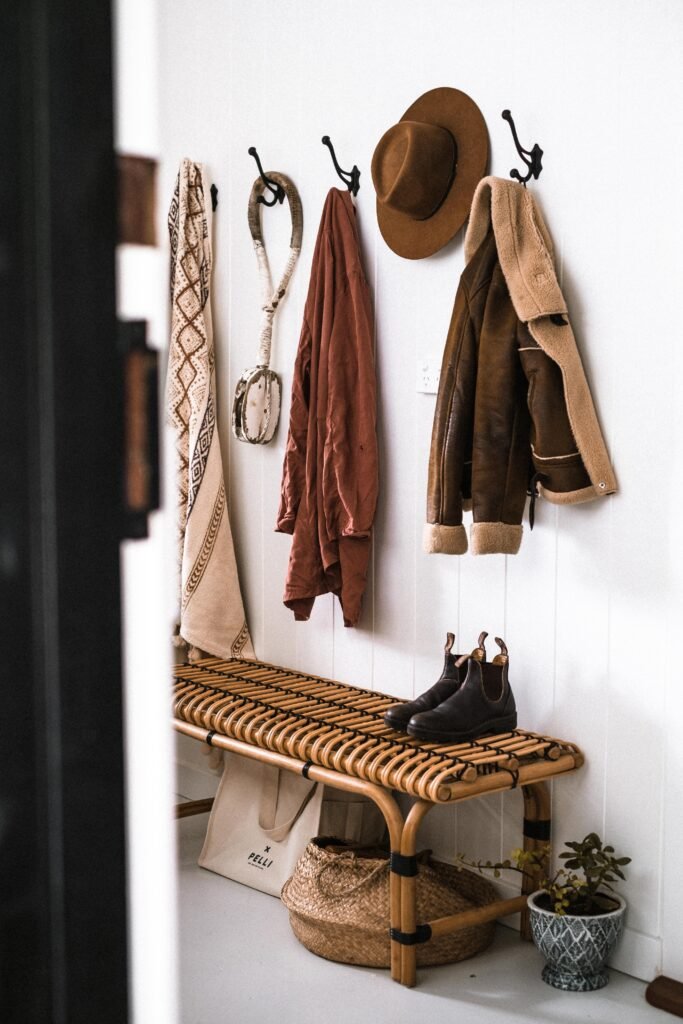
A compact wall-mounted shelf with hooks underneath combines two types of storage without using much floor space. Hang the everyday leash and harness below, then use the shelf for a small container of waste bags or another lightweight item you regularly take outside.
Keep the setup deliberately simple. Once keys, mail, sunglasses, dog toys, and other household items begin accumulating on the shelf, it becomes another cluttered surface instead of a useful walking-gear station. The leash should remain the easiest item to see and reach.
For a narrow entrance, choose a shelf that doesn’t project too far into the walking path. If you’re organizing the rest of the space as well, our dog-friendly entryway ideas cover practical ways to manage paws, towels, walking gear, and other everyday entrance clutter without requiring a dedicated mudroom.
6. Create a Compact Dog Walking Station
A dog walking station sounds elaborate, but for leash storage it can be as simple as two hooks and a small container beside the door. The goal isn’t to build another piece of furniture; it’s to keep the handful of items you routinely need for walks in one predictable location.
Hang the leash and harness where they’re immediately accessible, then keep waste bags and other small essentials nearby. Spare equipment can go in a drawer, basket, or closet rather than filling the everyday station. This distinction between daily gear and backup gear is what prevents a useful storage area from becoming cluttered.
If your entrance is part of a larger utility space, our dog-friendly mudroom ideas show how to organize the broader room around muddy paws and outdoor dog gear.
Think about what actually needs to leave the house with you as well. The ASPCA recommends using a leash and collar with proper identification when walking your dog and bringing fresh water, particularly when needed for the conditions and length of the walk. see ASPCA: 9 Tips to Get the Most Out of Walks with Your Dog
7. Use a Pegboard for Leashes and Walking Gear
A pegboard is useful when you want more flexibility than fixed wall hooks provide. You can give leashes and harnesses separate hooks, add a small basket for waste-bag rolls, and rearrange the layout later if your storage needs change.
This makes pegboards particularly practical for households with several dogs or different types of walking equipment. Instead of stacking everything together, each item can remain visible and accessible. If another leash or harness is added later, you can usually reorganize the board rather than installing an entirely new storage system.
Keep the layout restrained, though. A pegboard filled with every dog accessory you own can quickly look busier than the clutter it was supposed to solve. Use it primarily for walking equipment and move rarely used items somewhere else.
8. Store Extra Leashes in a Drawer or Bin
Not every leash needs prime position beside the front door. Spare leashes, long lines, seasonal gear, and equipment used only for particular activities can be stored separately in a drawer, labeled bin, or closet container.
Loosely coil each leash before storing it so clips and straps don’t become tangled. Drawer dividers or small individual containers can make it easier to separate different types of gear, particularly if you own several leashes for different purposes.
This approach keeps the everyday walking area uncluttered while ensuring backup equipment is still easy to find. It’s also worth checking stored leashes occasionally rather than forgetting about them indefinitely.
9. Give Each Dog Its Own Leash Hook
In a multi-dog household, individual storage can save a surprising amount of time. Give each dog a separate hook or section and keep the matching harness with the appropriate leash. Labels, different hook styles, or clearly separated positions can make identification even quicker.
Leave enough distance between each set of gear so the leashes don’t become tangled together. If one dog uses different equipment for ordinary walks and another activity, keep the everyday setup on the main hook and move less frequently used gear to secondary storage.
The system doesn’t need to look elaborate. Its purpose is simply to make it obvious which equipment belongs to which dog, especially when several people in the household share walking duties.
10. Use Vertical Storage in a Small Apartment
Small homes rarely have spare floor space for dedicated dog furniture, so unused wall and door space becomes much more valuable. A narrow wall-mounted rail, a few hooks, an over-the-door organizer, or storage inside a closet can keep walking equipment organized without crowding the entrance.
Look at the vertical areas immediately around the door before buying a large shelving unit. A small strip of unused wall beside the entrance may provide enough room for two or three hooks, while the inside of a nearby closet can hold backup equipment. Using several small zones intentionally is often more practical than trying to fit one large organizer into a compact apartment.
Renters should choose installation methods appropriate for their walls and lease conditions and follow the manufacturer’s weight and mounting instructions. The objective is to use otherwise wasted space without creating damage or making a narrow entrance harder to move through.
Where Is the Best Place to Store Dog Leashes?
For an everyday leash, the best storage location is usually close to the door you actually use for walks. That might be the front entrance, back door, garage entry, or mudroom rather than the most visually obvious part of the house.
The storage method matters less than the location. A beautiful organizer that’s inconvenient to reach will probably go unused, while one simple hook beside the correct door can work perfectly. Ideally, you should be able to grab the leash on the way out and put it back without making a separate trip through the house.
If muddy paws are part of the same entrance routine, keeping a towel nearby can help stop outdoor mess from spreading farther. Our guide to keeping floors clean with dogs explains how to combine entrance cleanup with the rest of your floor-care routine.
How to Store Dog Leashes in a Small Space
In a small home, prioritize storage that uses existing surfaces rather than taking up more floor area. Wall hooks, the inside of a closet door, a narrow shelf with hooks, or an over-the-door organizer can all hold everyday walking equipment in spaces that would otherwise go unused.
It’s also useful to separate everyday gear from extras. Keep the leash and harness you use regularly near the entrance and move spare leashes or less frequently used equipment to a drawer or bin. That single change can make a small storage area feel considerably less crowded.
Avoid adding a large “dog station” simply because you see one in a larger home. If two hooks and a small basket meet your needs, that’s the better solution.
What Should You Keep with Your Dog’s Leash?
Keep the items you genuinely use on most walks near the leash rather than trying to store every dog accessory in the same place. Depending on your routine, that may include the dog’s harness, waste bags, and a small walking pouch. Identification should be kept current on the equipment your dog wears, while water may also be necessary depending on the walk and conditions.
If you own several leash styles, don’t assume they all need to hang beside the door. Keep your normal walking leash accessible and store specialized or backup options separately. The American Kennel Club’s guide to different types of dog leashes and how they’re used is a useful reference if you’re deciding which equipment makes sense for different activities.
Dog Leash Storage Mistakes to Avoid
The most common mistake is creating a storage system that’s too complicated to use. If putting the leash away involves opening several containers or walking to another room, it’s likely to end up back on the counter. Keep everyday gear accessible and reserve closed storage for equipment you don’t need regularly.
Overloading hooks is another problem. Several leashes, harnesses, bags, and coats piled onto one hook are difficult to separate and may exceed what the hook or fixing is designed to support. Give frequently used items their own space and follow the manufacturer’s installation and weight guidance.
Finally, don’t put wet or muddy gear straight into a closed basket or drawer. Allow damp equipment to dry appropriately first and clean it according to the manufacturer’s care instructions.
Frequently Asked Questions About Dog Leash Storage
Should dog leashes be hung or stored in a basket?
Either method can work. Hooks are usually better for everyday leashes because they keep them visible, separated, and easy to grab. Baskets work well when you don’t want gear displayed or can’t install wall storage, but loosely coil each leash before putting it away to reduce tangling. You can also combine the two methods by hanging the everyday leash and storing backups in a basket.
How should you store several dog leashes without tangling them?
Avoid piling multiple leashes onto one hook or dropping them loose into the same container. Give frequently used leashes separate hooks and loosely coil spare leashes before putting them into a drawer or bin. In multi-dog homes, assigning a hook or storage section to each dog makes the system even easier to manage.
How should you store a wet or muddy dog leash?
Don’t put a damp or muddy leash directly into closed storage. Clean it according to its manufacturer’s care instructions and allow it to dry appropriately before putting it away. Care varies according to material, so don’t assume the same washing method is suitable for nylon, leather, and other leash types.
Where should spare dog leashes be stored?
Spare leashes don’t need to occupy the easiest-to-reach position near the door. Keep the everyday leash accessible and store backups in a drawer, labeled bin, closet, or another secondary location. This keeps the main walking area tidy while ensuring you can still find a replacement when needed.
Final Thoughts on Dog Leash Storage Ideas
Good dog leash storage ideas are less about creating an elaborate pet station and more about putting everyday walking equipment where it naturally fits into your routine. For many homes, one or two hooks beside the correct door will work better than a large organizer. Others may benefit from a basket, closet-door hooks, a narrow shelf, or a pegboard that keeps several sets of gear separated.
Start with the leash you use most often and give it a permanent home close to your normal exit. Keep daily essentials nearby, move backup equipment into secondary storage, and avoid letting the area become a collection point for unrelated dog supplies. The simpler the system is to use after every walk, the more likely it is to stay organized.