Dog towel storage ideas need to solve two different problems: keeping clean towels close enough to grab when your dog comes in wet or muddy, and giving used towels somewhere sensible to go afterward. If those two jobs aren’t separated, clean towels quickly get mixed with damp ones, while used towels migrate onto chairs, radiators, door handles, and whatever else happens to be nearby.
You don’t need a custom mudroom or a large dog-washing station to fix this. In many homes, two or three clean towels near the door and a separate hook or rail for damp ones are enough. The important part is matching the storage to the route your dog actually takes through the house.
These 10 practical ideas cover baskets, hooks, drawers, shelves, benches, rails, and other compact options, with particular attention to small entryways and homes where every bit of storage has to earn its place.
Disclosure: As an Amazon Associate I earn from qualifying purchases.
Quick Answer: Where Should You Keep Dog Towels?
Keep a small supply of clean dog towels close to the place where you normally need them. If your dog comes through the back door after walks, that is where the everyday paw towels belong. If you mainly use larger towels after baths, keeping those in or near the bathroom or laundry makes more sense.
A practical setup usually has two separate parts:
- Clean storage: a basket, drawer, shelf, or cubby containing dry towels that are ready to use.
- Used-towel space: a hook, rail, or other suitable place where damp towels can stay separate before washing or reuse.
You don’t need your entire towel supply beside the door. For many households, two or three clean towels are enough for everyday use, with backups stored elsewhere.
Separate Clean Towels From Wet Ones From the Start
Before buying another basket or installing hooks, think about the full life of a dog towel. It starts clean and dry, gets grabbed when your dog comes inside, becomes wet or muddy, and eventually goes to the laundry. Problems start when one storage spot is expected to handle every stage.
A basket is excellent for clean folded towels but usually a poor destination for a damp one. A hook is useful for a towel that needs air around it, but less useful for storing a week’s worth of clean towels. Giving those jobs separate locations keeps the system obvious without making it complicated.
For a small home, the setup can be as simple as:
- a small basket or drawer for clean towels
- one towel kept within immediate reach
- a hook or rail for a damp towel
- a clear route to the laundry for towels that are dirty enough to wash
Once everyone in the household knows which place is for clean towels and which is for used ones, towels are much less likely to drift around the house.
1. Keep a Small Basket Near the Door
A small basket is one of the easiest dog towel storage ideas because it requires no installation and works in almost any type of home. Fold or roll two or three clean towels and place them near the entrance your dog uses most often. After a rainy walk, you can grab one before wet paws travel farther inside.
Choose the basket according to the space rather than the number of towels you own. A narrow or slightly taller basket may fit beside a bench or cabinet without consuming much of a tight hallway. Resist the temptation to fill it with every spare dog towel. The basket should hold the towels you actually reach for during an ordinary week, while extras can stay in the laundry or linen cupboard.
If muddy walks are the bigger problem, our guide on how to keep your entryway clean with a muddy dog covers the wider cleanup routine without turning your towel area into an entire mudroom project.
Product option: A small cotton-rope basket with handles works well here because it keeps a few folded dog towels together while still being easy to grab and move when needed.
Best for: Small entryways, renters, and homes that need a simple grab-and-go solution.
2. Install Wall Hooks for Everyday Towels
When floor space is limited, a couple of well-positioned hooks can be more useful than another piece of furniture. Place them near the entrance, laundry, or bathroom where towels are regularly used. One hook can hold a clean grab-ready towel, while another can temporarily hold a damp one, provided there is enough space around it for the towel to hang rather than remain tightly bunched.
Avoid covering a short hook rail with several wet towels at once. They end up pressed against one another, which defeats much of the benefit of hanging them. Think about height as well: the towels should be easy for people to reach without hanging so low that your dog can pull them down.
Renters can consider removable hooks where they are suitable for the wall surface and expected load, while homeowners may prefer a small permanent hook rail if dog towels are part of the everyday routine.
Product option: Heavy-duty stick-on wall hooks are a practical option when you want a dedicated place for everyday dog towels without taking up floor space.
Best for: Narrow entrances and homes with little spare floor space.
3. Use an Over-the-Door Rack
A door can provide useful towel storage without occupying another inch of floor space. An over-the-door organizer with hooks or rails can work particularly well on a laundry, mudroom, utility-room, or bathroom door.
Before buying one, check how the door operates. It should still close properly, and the organizer shouldn’t hit a wall, shelf, or cabinet every time the door swings open. Also consider airflow. A damp towel pressed between the back of a door and a wall is not getting the same exposure as one hanging freely on a rail.
If the door normally stays closed, use the organizer mainly for clean towels or move wet ones somewhere more open after use.
Product option: For a simple setup, an adjustable wall-mounted towel bar like this one can give damp dog towels more room to hang open and dry between uses.
Best for: Apartments, bathrooms, and utility areas where wall and floor space are already occupied.
4. Add a Narrow Wall Shelf for Clean Towels
A small strip of unused wall above a bench or beside the entrance can hold a shallow shelf for folded dog towels. This keeps the floor clear while giving the clean supply a permanent home.
Keep the shelf proportionate to the room. A deep shelf jutting into a narrow hallway can make the space harder to use and become something people constantly brush against. You only need enough depth for folded towels or a compact basket.
Use the shelf for clean, dry towels and keep damp ones somewhere else. That visual separation means nobody has to wonder whether the towel on the shelf was used on muddy paws yesterday.
If you’re organizing the whole entrance rather than just the towels, our dog-friendly entryway ideas cover compact ways to give everyday dog gear a defined place.
Best for: Small entryways with unused vertical space.
5. Use Space Under or Beside an Existing Bench
If you already have an entryway or mudroom bench, use that before buying a separate towel-storage unit. A small basket underneath, one existing cubby, or a narrow space at the end may be enough for the clean supply.
The advantage is that you’re assigning a job to furniture already taking up floor space. Just don’t give dog towels the entire bench if one small section is sufficient. In a compact home, the best storage often comes from dividing existing space more carefully rather than adding another container.
Keep wet towels out of enclosed bench storage until they’re ready to be stored there. Closing a damp towel inside a dark cubby or compartment makes it harder to monitor and keeps moisture inside the storage area.
If you have a dedicated transition space, our dog-friendly mudroom ideas look at ways to organize the rest of the room around muddy paws and everyday dog gear.
Best for: Mudrooms and entrances that already have seating, shelves, or cubbies.
6. Create a Drawer Just for Clean Dog Towels
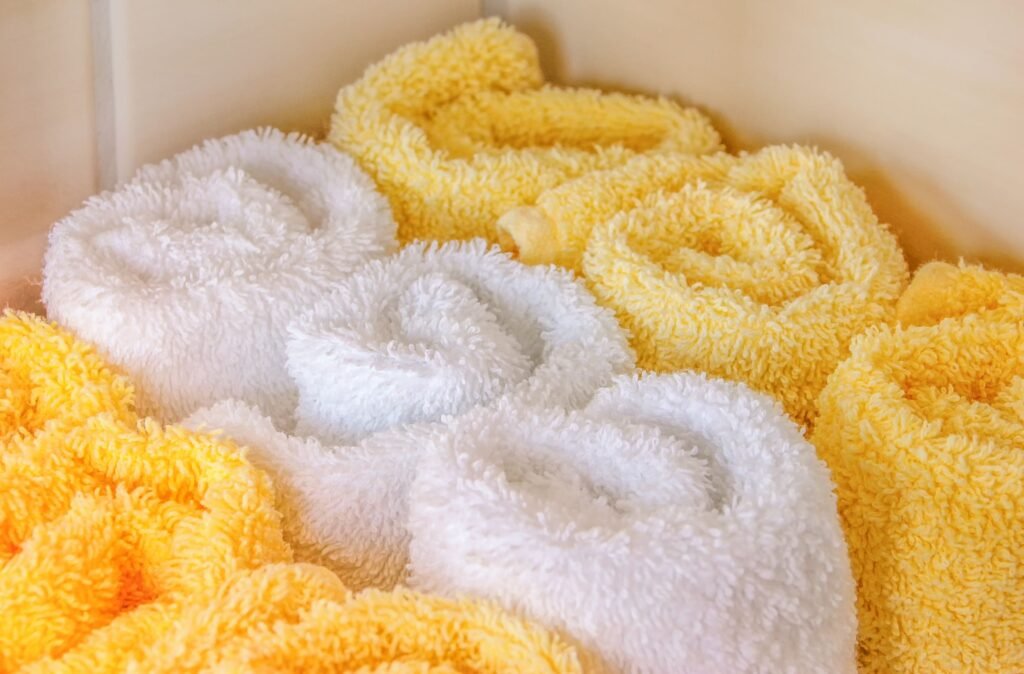
If you prefer hidden storage, a spare drawer near the entrance, laundry, or bathroom can be ideal. It keeps clean towels away from entryway dust and visual clutter while still making them easy to reach.
You don’t need a perfectly arranged stack. Fold the towels consistently enough that you can see what is available and remove one without pulling everything else out with it. The more important rule is that the drawer remains for clean, dry towels only.
Don’t put a damp towel back in the drawer because you expect to use it again later. Hang it somewhere appropriate instead, then return it to closed storage only when it belongs there.
Best for: Minimalist homes and anyone who already has spare cabinetry near the dog’s cleanup area.
7. Add a Rail for Damp Towels
Clean storage solves only half the problem. If your dog regularly comes home soaked, a dedicated towel rail can be more useful than adding another clean-towel basket. A rail allows the towel to hang more open than it would on a crowded hook, making it easier to keep the used towel separate while it waits for laundry or reuse.
A laundry, utility room, mudroom, or other suitable area is often a better location for the rail than the front hallway. The clean and wet zones do not have to be side by side. In fact, separating them can make the system clearer.
Spread the towel rather than folding it over itself several times. If it is heavily muddy or dirty, move it into your normal laundry routine rather than treating the rail as permanent storage.
Best for: Rainy climates, long-haired dogs, and households that regularly deal with wet walks.
8. Use a Small Rolling Cart Only If It Solves More Than One Problem
A narrow rolling cart can be useful in a multipurpose room where dog supplies need to move. The top tier might hold clean towels, while another tier contains a small amount of grooming or walking equipment. When you need the floor space, the whole unit can move.
But this is one of those storage ideas that can look better online than it works in a genuinely small hallway. Measure the footprint before buying anything and imagine walking past it with shopping bags, shoes, a dog, and another person in the same space.
If two wall hooks and a small basket solve the problem, they’re probably the better choice. Add movable furniture only when mobility genuinely helps your routine.
Best for: Multipurpose rooms where the storage actually needs to move.
9. Keep Outdoor and Heavy-Duty Towels Separate
Not every dog towel needs to live beside the main entrance. Towels used for beach trips, the car, garden mud, camping, or particularly dirty jobs can have their own storage area in the laundry, garage, utility room, or another suitable dry location.
This keeps the everyday basket small and makes it easier to grab the right towel for the job. It also means you don’t have to dig through six large outdoor towels when all you need is something small for damp paws.
For dogs that bring mud farther into the house, our guide on how to protect walls from muddy dogs covers another part of the cleanup problem.
Best for: Active dogs, beach trips, garden access, and households with separate outdoor gear.
10. Create Separate Clean and Used Towel Zones
If dog towels are used almost every day, separating clean and used storage is usually the most reliable system. It doesn’t require a dedicated dog station. It simply means the towel has an obvious place before use and another destination afterward.
A practical setup might look like this:
- Clean zone: two or three folded towels in a basket, drawer, shelf, or bench cubby near the door.
- Used zone: a separate rail or hook in the laundry, mudroom, or another suitable place for damp towels.
The two zones can be in different rooms. If the clean towels need to be beside the back door but the best place for damp towels is the laundry, use both spaces. What matters is that the route is obvious enough that wet towels stop ending up on furniture.
Best for: Multi-dog households and homes where rain, mud, swimming, or regular bathing makes towels part of the daily routine.
Best Dog Towel Storage by Home Type
The right dog towel storage ideas depend on the entrance you use, how frequently towels get wet, and how much existing storage you can reuse. Start with the smallest setup that handles an ordinary week.
| Your situation | Try first | Avoid |
|---|---|---|
| Tiny entryway | Two hooks and a small clean-towel basket | Large floor bins |
| Apartment | Over-the-door storage or a drawer | Bulky dedicated furniture |
| Mudroom | Bench cubby and separate drying rail | Mixing wet and clean towels |
| No mudroom | Small basket near the main entrance | Keeping everyday towels far from the door |
| Multiple dogs | Separate clean and used zones | One overflowing basket |
| Frequent muddy walks | Clean basket and dedicated used-towel area | Leaving damp towels in a pile |
| Minimalist home | Drawer with a separate drying location | Too many visible storage pieces |
If your current system needs more furniture than the table suggests, simplify before adding anything else. Dog towels are everyday tools, not a collection that needs its own room.
How to Keep Dog Towels From Smelling Musty
The storage problem changes once a towel is wet. A clean folded towel can sit happily in a drawer or basket; a damp towel needs different treatment. The EPA’s guidance on moisture and mold emphasizes controlling moisture and drying damp materials, which is a useful principle for any part of the home where wet textiles accumulate.
For dog towels, a few habits make the biggest difference:
- Don’t pile damp towels together. A crumpled towel underneath other wet items is easy to forget.
- Give used towels some space. Hang them more openly rather than packing several onto the same small hook.
- Keep them away from the clean supply. A clean basket should never become temporary storage for yesterday’s damp paw towel.
- Wash dirty towels appropriately. Follow the towel’s care label and your washing-machine guidance rather than repeatedly hanging a heavily soiled towel for reuse.
- Clean the storage itself. If a basket, drawer, or cubby develops an odor, empty and clean it as appropriate before putting freshly washed towels back.
The American Kennel Club’s guidance on drying a dog also emphasizes drying thoroughly after bathing. For storage purposes, the useful takeaway is simple: don’t let the towel become the forgotten wet part of the routine once your dog is dry.
Should You Keep Dog Towels by the Front Door?
Only if the front door is where you actually need them. Storage should follow your dog’s routine rather than a decorating rule. If almost every walk ends at the back door, that’s where the grab-ready towel belongs. If your dog enters through the kitchen after using the yard, a small basket or hook there may be more useful.
Bath towels can live somewhere completely different. Keeping them in the bathroom or laundry may be more practical than carrying a dripping dog through the house simply because all the dog towels have been stored together.
You can have more than one towel location without creating clutter. Keep each supply small and specific to the job it handles.
What Not to Do With Wet Dog Towels
Most towel clutter comes from a handful of habits rather than a lack of storage. Try to avoid:
- putting a damp towel back with the clean supply
- leaving wet towels crumpled on the floor
- stacking several damp towels tightly on one hook
- closing wet towels inside an unventilated bench or drawer
- letting used towels permanently live on dining chairs or other furniture
- keeping your entire towel supply beside the door when only a few are used regularly
Don’t make the system so complicated that nobody follows it either. If the official wet-towel location is three rooms away but everyone naturally leaves the towel beside the back door, either create a temporary hanging spot there or reconsider the layout. Good storage works with the household’s routine.
How Many Dog Towels Should You Keep by the Door?
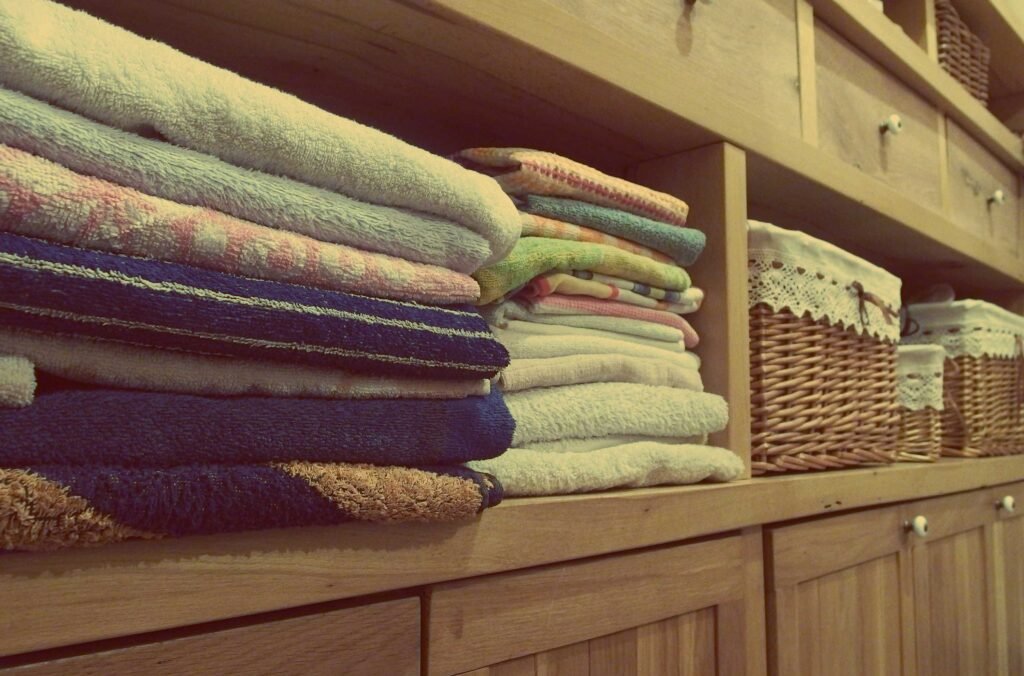
For many households, two or three clean towels near the main entrance are enough, with the rest stored in the laundry or linen cupboard. There is no universal number because a large long-haired dog in a rainy climate will go through towels very differently from a small short-haired dog that rarely comes home muddy.
Start with a small supply and adjust it according to what actually happens. If you regularly reach the last clean towel before laundry day, add another. If half the basket remains untouched month after month, move the extras elsewhere. That is more useful than buying a large basket and then filling it simply because the space exists.
Frequently Asked Questions
Where is the best place to store dog towels?
Keep a small number of clean towels close to the entrance, bathroom, or washing area where you use them most often. Give damp and dirty towels a separate destination rather than mixing them back into the clean supply.
How should I store dog towels in a small entryway?
Use existing or vertical space before adding furniture. Wall hooks, an over-the-door rack, a narrow shelf, a drawer, or a small basket underneath an existing bench can all store towels without taking over the walkway.
Can I keep wet dog towels in a basket?
A closed or tightly packed basket is better suited to clean, dry towels. Damp towels are generally easier to manage when they are kept separate and given room rather than being crumpled together while wet.
How can I keep dog towels from smelling?
Don’t leave damp towels bunched together or mixed with the clean supply. Give used towels room, wash them according to their care instructions, and clean the basket, drawer, rail, or other storage area when necessary.
Should dog towels be stored separately from household towels?
They don’t necessarily need a completely separate cupboard, but giving them a clearly defined section makes everyday cleanup easier. It also prevents someone from accidentally grabbing a towel that is normally used for muddy paws.
What is the easiest dog towel storage setup for a renter?
A small basket for clean towels combined with suitable removable or over-the-door hooks is one of the simplest renter-friendly setups. It creates separate clean and used-towel locations without requiring custom cabinetry.
Final Thoughts
keep the system smaller than the problem. The most useful dog towel storage ideas don’t require custom cabinets, a dedicated mudroom wall, or a collection of matching baskets. They put a few clean towels where you actually need them and give the wet ones somewhere different to go afterward.
Start with your dog’s normal routine. Keep two or three towels near the entrance used after walks, store bath towels closer to the bathroom if that makes more sense, and use a hook or rail for the damp stage instead of letting wet towels settle on furniture.
Use wall space before adding another floor unit, and use an existing drawer, shelf, or bench before buying dedicated storage. Most importantly, keep clean storage separate from wet-towel management. Once those two jobs have clear places, the towels become much easier to keep under control without turning a small entryway into a dog-supply room.