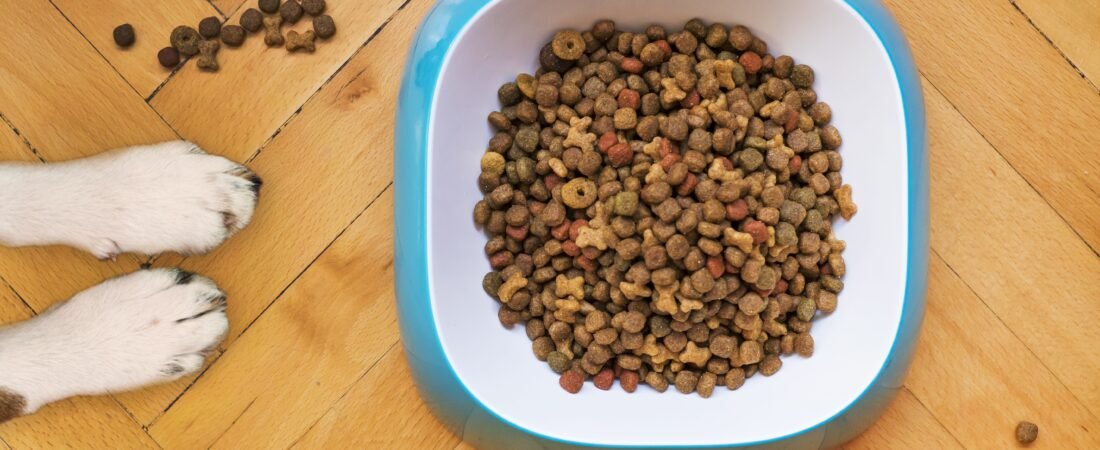
A dog bowl that slides across the floor at every meal can quickly become frustrating. Your dog pushes it forward while eating, water splashes over the edge, kibble scatters across the room, and the bowl sometimes ends up several feet from where you put it.
Fortunately, you usually don’t need an elaborate feeding station to fix the problem. In most homes, the easiest way to stop dog bowls sliding around the floor is to increase the grip underneath them. A good non-slip mat or bowl with a rubberized base is the best place to start. If your dog still moves the bowl, adding more weight or using a stable holder can provide additional control.
The right solution depends on why the bowl is moving in the first place. A lightweight bowl on smooth tile has a different problem from a wide bowl that your dog repeatedly tips, and a messy water bowl creates different concerns from a dry-food bowl. Below are eight practical fixes, followed by recommendations for tile, vinyl, laminate, hardwood and carpet.
Affiliate Disclosure: This post contains affiliate links. If you make a purchase through these links, I may earn a commission at no extra cost to you. As an Amazon Associate, I earn from qualifying purchases.
Why Does My Dog’s Bowl Keep Sliding?
Most sliding bowls come down to one simple issue: there isn’t enough friction between the bowl and the surface underneath it. Smooth tile, sealed hardwood, vinyl and laminate can provide very little grip, particularly when the bottom of the bowl is smooth as well. A dog pushing forward with their nose or tongue can therefore move a surprisingly sturdy-looking bowl.
The bowl itself can contribute to the problem. Lightweight plastic and thin stainless-steel bowls are easier to push than heavier alternatives, and a worn or missing rubber base can make an otherwise good bowl slide. Your dog’s eating style matters too. Some dogs eat calmly from the center while others press into the sides as they chase the last pieces of food around the bowl.
It also helps to distinguish sliding from tipping. A bowl that remains upright but travels across the floor mainly need more grip. A bowl that rocks or flips may instead have a stability problem caused by its shape or narrow base.
Watch one meal before buying anything. If the whole bowl slides forward, start with grip. If it tips, look for a wider and more stable shape. If water rather than movement is the biggest problem, prioritize spill containment as well.
1. Put a Non-Slip Mat Under the Bowls
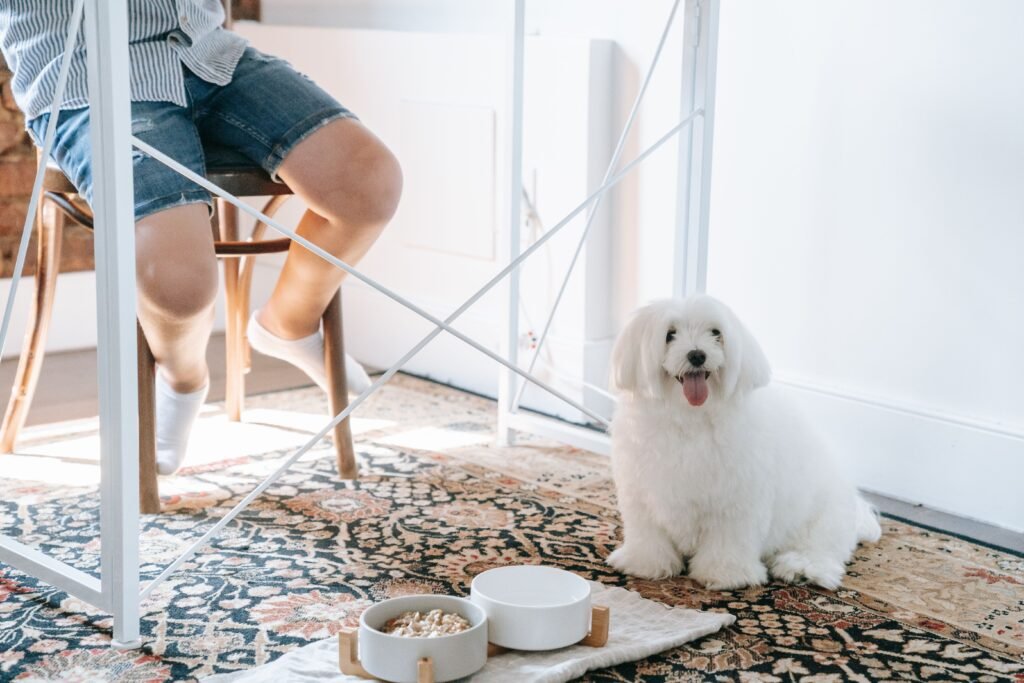
For most households, a non-slip mat is the simplest first fix. Silicone or rubber creates more friction between the feeding area and the floor, reducing the amount of movement when your dog pushes against the bowl.
This approach is particularly useful on tile, vinyl, laminate and smooth hardwood because you can improve grip without replacing bowls that are otherwise perfectly suitable.
Size matters. The mat should extend beyond the bowl rather than fitting tightly underneath it. If it’s too small, your dog can push the bowl off the edge or move the mat and bowl together. If you keep both food and water in the same area, choose a mat large enough for both with some extra space around them.
Product option: A large non-slip silicone feeding mat can help keep food and water bowls in place while also catching some of the spills around the feeding area.
Best for: The first fix to try on smooth hard flooring.
2. Choose a Bowl With a Non-Slip Base
If you don’t want a separate mat, look underneath the bowl itself. A rubber or silicone ring around the base can create enough friction to stop everyday movement without adding anything else to the feeding area.
Before replacing your current bowl, check whether it originally had a rubber ring that’s now loose, damaged or missing. These rings can wear down, collect debris or stop gripping effectively over time. If the rest of the bowl is still in good condition, replacing the removable base may be easier than replacing the whole bowl. Non-slip bowls are widely available because rubberized bases genuinely address the friction problem.
Product option: A stainless-steel dog bowl with a non-slip rubber base can provide extra grip on smooth floors without requiring a separate mat.
Best for: A simple, compact feeding setup without a separate mat.
3. Try a Heavier, Wider Dog Bowl
Sometimes the bowl is simply too easy for your dog to move. A light bowl that works perfectly for a small, gentle eater may travel across the kitchen when used by a larger dog that pushes firmly while eating.
A heavier stainless-steel or ceramic bowl can improve stability, particularly when it also has a broad base. However, weight shouldn’t be treated as the complete solution. A heavy bowl with a polished bottom can still slide across smooth tile; it simply takes more force to move it.
For that reason, the strongest combination for a persistent bowl pusher is often weight plus grip: a stable bowl sitting on a non-slip mat or fitted with a rubberized base.
Inspect ceramic bowls regularly for cracks, chips or damaged surfaces and follow the manufacturer’s cleaning instructions.
Best for: Larger dogs and enthusiastic eaters that push lightweight bowls around.
4. Use a Stable Bowl Holder or Feeding Station
A holder or feeding station can stop food and water bowls from moving independently by securing them within a larger structure. This can work particularly well when your dog pushes hard enough to move ordinary bowls even when they’re sitting on a mat. Look for a setup that holds each bowl securely and sits flat without wobbling. Non-slip feet underneath the station can provide additional grip.
There’s no need to choose an elevated feeder purely because elevation sounds more sophisticated. The purpose here is simply stability, and the feeding arrangement should remain suitable and comfortable for your individual dog. A low holder that locks the bowls into position may solve the movement problem perfectly well.
Keep the structure easy to clean too. Food, saliva and water can collect around bowl openings and underneath stands, so a feeding station that requires complicated disassembly every day may become more trouble than it’s worth.
Product option: A stable non-slip dog bowl stand can keep food and water bowls securely in place for dogs that continue to push individual bowls around.
Best for: Dogs that continue to move individual bowls despite simpler fixes.
5. Change the Feeding Position
Before buying anything, try moving the feeding area. If your dog consistently pushes the bowl in one direction, placing it near an appropriate stable boundary can limit how far it travels.
This works best as a temporary or supplementary solution rather than relying on a wall to hold the bowl in place permanently. Leave enough room for your dog to stand and eat comfortably, and avoid corners where spilled food and water become difficult to reach.
Also think about the surrounding surface. A water bowl repeatedly pushed against painted trim, cabinets or furniture may exchange one problem for another. On flooring that can be affected by moisture, you still need to prevent water from collecting underneath or behind the bowl. For most homes, changing the location works best when combined with a non-slip mat rather than being used instead of one.
Best for: Testing whether bowl direction and feeding location are contributing to the problem.
6. Use a Raised-Edge Mat for Water and Food Spills
If the bowl both slides and creates a mess, a silicone feeding mat with a raised border can solve two problems at once. The grippy surface reduces movement while the lip catches some of the water, crumbs and dropped food that would otherwise reach the surrounding floor.
Current feeding mats are frequently designed around this combination of non-slip grip and spill containment. The mat needs to be larger than the bowls to work properly. A narrow border won’t contain much when an enthusiastic drinker splashes several inches beyond the bowl. Lift the mat regularly as well. A raised edge protects the visible floor, but water can sometimes work underneath a mat unnoticed. This matters especially on wood and laminate.
Best for: Water bowls, messy drinkers and feeding areas where protecting the floor matters as much as stopping movement.
7. Check the Bowl Size and Shape
A bowl can be heavy and still be unstable if its proportions don’t suit the dog using it. A narrow base with a wide rim may rock more easily, while an oversized bowl can encourage some dogs to push around the edges as they try to reach remaining food.
Choose a bowl that allows your dog to reach food or water comfortably and has a stable footprint. For dogs that tend to tip bowls, a wider base can be more useful than simply adding more weight.
Watch how your dog interacts with the current bowl. If they repeatedly chase food around one particular edge, push their nose hard against the side, or accidentally catch the rim, the shape may be contributing to the movement.
If bowl pushing is a new behavior, particularly if your dog also appears uncomfortable, has difficulty eating or shows another change in appetite or behavior, don’t automatically assume the floor or bowl is responsible. A veterinary check may be appropriate.
Best for: Bowls that rock, tip or move because of how the dog physically interacts with them.
8. Create a Permanent Feeding Spot
A permanent feeding location makes the entire setup easier to manage. Choose a place where your dog has enough room to stand comfortably, where the bowls aren’t in a busy walkway, and where food or water spills can be cleaned without difficulty.
Then build the simplest combination that solves your particular problem: perhaps a non-slip mat and existing bowls, or a mat paired with heavier bowls if your dog pushes more forcefully.
Keeping the bowls in one place also makes maintenance easier because you can quickly notice spilled water, food underneath the mat or deterioration in a rubber base. It prevents bowls from becoming another piece of dog equipment that moves around the kitchen.
If your home is short on floor space, choosing the location carefully is particularly important. The goal isn’t to create a large pet-feeding station; it’s to give the bowls one practical home.
Best Solutions for Different Floor Types
The same dog bowl can behave very differently depending on the surface underneath it. Match the solution to the floor rather than assuming one product will perform identically everywhere.
Tile Floors
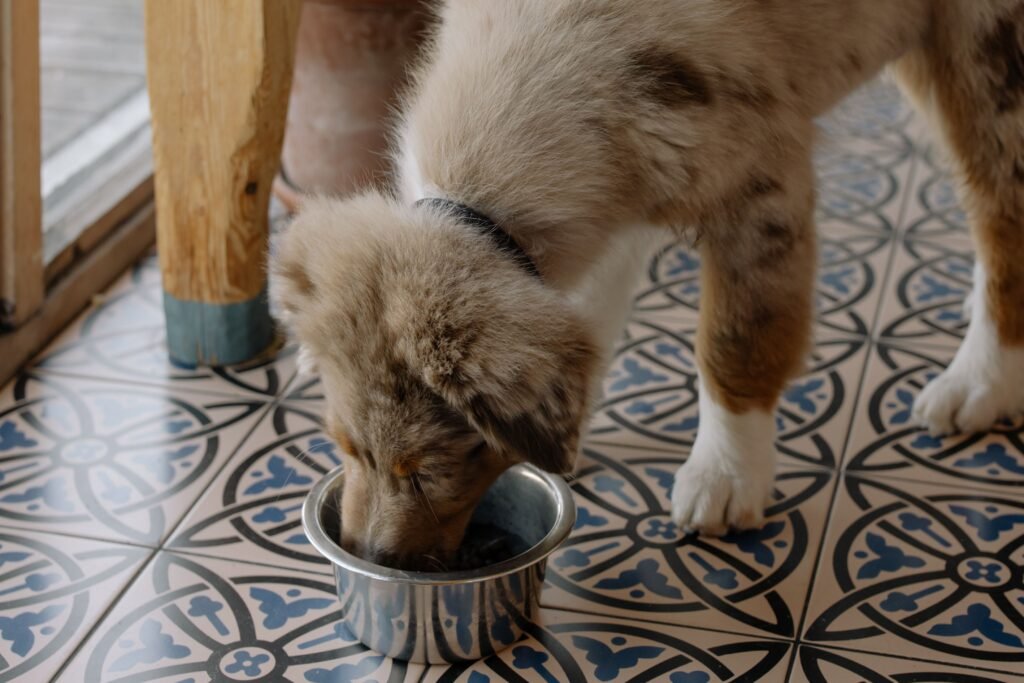
Smooth tile provides little grip for many bowls, so start with a rubber or silicone mat. If the bowl still moves, combine the mat with a heavier or wider bowl.
A raised-edge mat is especially helpful beneath the water bowl because tile may tolerate moisture well but spilled water can still create a slippery walking surface.
Vinyl Floors
Vinyl is generally straightforward to clean, but lightweight bowls can slide easily across smooth finishes. A non-slip bowl or silicone mat is usually enough for ordinary movement, with additional bowl weight if necessary.
Avoid unnecessary adhesives. Use removable grip first, and check that any mat or backing is suitable for your particular flooring according to both manufacturers’ instructions.
Laminate Floors
On smooth laminate, the combination of grip plus weight works well. A non-slip feeding mat keeps the base from moving while a stable bowl reduces the force transferred through it. Pay particular attention to water. Moisture performance varies considerably between laminate products, so clean spills promptly and lift the feeding mat periodically to make sure water isn’t sitting underneath it.
Hardwood Floors
With hardwood, you have two goals: stop the bowl from moving and stop repeated water exposure or dragging from damaging the finish. A clean, soft silicone mat with a stable bowl creates a barrier between the bowl and the wood while adding grip. Avoid allowing dirt or grit to accumulate underneath, because debris trapped beneath a mat or dragged bowl can potentially mark the finish. If water is your bigger concern, our dedicated guide explains how to protect hardwood floors from a dog water bowl. For homeowners comparing flooring more broadly, See our guide to the best flooring for dogs.
Carpeted Floors
Carpet naturally provides more friction, so sliding may be less severe. Spills are the bigger concern. Use a waterproof or water-resistant feeding mat or tray large enough to protect the carpet around both bowls.
Raised edges can help contain water and food, but lift and clean the mat regularly rather than allowing moisture or crumbs to remain trapped underneath.
Quick Rule of Thumb:
- For sliding on a smooth floor, start with grip.
- For persistent pushing, combine grip with a heavier, wider bowl.
- For tipping, concentrate on bowl shape and stability.
- For water spills, add a sufficiently large raised-edge mat.
That simple diagnosis is more useful than buying several products without knowing what problem you’re actually trying to solve.
What to Look for in a Non-Slip Dog Bowl Setup
A successful setup should keep the bowl reasonably stable without making feeding harder for your dog or creating more cleaning work.
Good Grip
Rubber and silicone are useful because they create friction between smooth surfaces. Whether the grip is built into the bowl or supplied by a separate mat matters less than whether it stays stable on your particular floor.
Inspect rubber rings and mats periodically. Worn, dirty or damaged surfaces may grip less effectively than they did when new.
Enough Stability
Weight can help, but combine it with a wide, stable base rather than choosing the heaviest bowl you can find. The bowl should remain easy enough to handle, wash and refill.
Appropriate Size and Shape
Your dog should be able to eat and drink comfortably without repeatedly pushing against the rim. Pay attention to both the capacity and the width of the base.
Easy-to-Clean Materials
The feeding area needs regular cleaning regardless of whether the bowl slides. The U.S. Food and Drug Administration recommends washing pet food bowls with soap and hot water after each use, while its pet-food storage guidance recommends washing water bowls daily. See FDA: Tips for Safe Handling of Pet Food and Treats.
Remember to clean underneath rubber rings, mats and feeding stations too. These hidden areas can collect food debris and moisture even when the visible feeding area looks tidy.
Protection From Spills
For a messy drinker, the mat should extend far enough beyond the bowl to catch realistic splashes rather than merely framing the bowl. A raised border can help contain some of that water.
Safe Placement
Keep the feeding area outside busy walking routes. A perfectly non-slip bowl doesn’t help if people repeatedly kick it or step into spilled water. The mat should also sit flat without curled edges that create a tripping hazard.
Common Mistakes When Trying to Stop Dog Bowls Sliding
One of the biggest mistakes is using a mat that’s barely larger than the bowl. The bowl can simply move beyond it, while an undersized mat provides little protection from food or water spills. Choose enough surface area for the bowls and some surrounding space.
Another mistake is assuming heavy means non-slip. Weight improves stability, but it doesn’t create much friction on its own. A heavy ceramic bowl with a smooth underside can still travel across tile. Combine weight with a grippy base when necessary.
Don’t ignore water underneath the mat either. Lift and clean underneath it regularly, especially on hardwood or laminate. Our broader guide to keeping floors clean with dogs covers feeding mess alongside muddy paws, fur and everyday floor care.
Avoid adhesives as your first solution. Adhesive products can leave residue or may not be appropriate for every floor finish. A suitable removable mat, rubberized bowl or stable holder is simpler and easier to change.
Finally, don’t sacrifice your dog’s comfort just to stop movement. The goal isn’t to bolt the feeding area to the floor. The bowl should still be appropriately sized, easy for your dog to reach and positioned somewhere they can eat or drink comfortably.
Frequently Asked Questions
How do I stop my dog’s bowl from sliding?
Start with a sufficiently large silicone or rubber non-slip mat. If the bowl still moves, combine the mat with a heavier, wider bowl or use a bowl with an integrated rubberized base. If the problem is tipping rather than sliding, look at the bowl’s shape and base width instead.
What can I put under a dog bowl to stop it moving?
A non-slip silicone or rubber feeding mat is one of the simplest options on tile, vinyl, laminate and other smooth hard floors. Choose one that’s large enough to remain underneath the bowl even when your dog pushes against it.
Why does my dog push the food bowl around while eating?
Some dogs naturally push against the bowl as they use their tongue or nose to reach food around the edges. Lightweight bowls and slippery floors make this movement more obvious. If the behavior appears suddenly or your dog seems uncomfortable while eating, speak with your veterinarian rather than assuming it’s only a bowl problem.
Are non-slip dog bowls worth it?
They can be very effective when lack of friction is the main problem. Rubber or silicone underneath the bowl can significantly reduce movement on smooth flooring. An enthusiastic larger dog may still benefit from additional weight or a separate feeding mat.
How do I stop a water bowl from sliding and spilling?
Use a stable bowl with a non-slip base on a large silicone mat with raised edges. The grip reduces movement while the border catches some splashed water. Position it outside busy walkways and check underneath the mat regularly so moisture doesn’t remain against the floor.
Is a heavy bowl better than a non-slip bowl?
Not necessarily. Weight makes a bowl harder to push, but grip directly addresses sliding. For many dogs, a non-slip base or mat is more effective than weight alone. A heavier bowl combined with good grip is useful for dogs that push particularly hard.
Why does the mat slide with the dog bowl?
The mat may be too small, too light or unsuitable for the floor surface. Dirt, grease or water underneath it can also reduce grip. Clean and dry both surfaces first, then use a mat designed to remain stable on your particular flooring and large enough for the full feeding setup.
Final Thoughts
Learning how to stop dog bowls sliding around the floor starts with identifying what is actually moving and why. If the bowl stays upright but travels during meals, lack of grip is usually the first thing to address. Start with a good non-slip silicone or rubber mat or a bowl with a rubberized base.
If your dog can still push it around, add stability with a heavier and wider bowl. If the bowl tips rather than slides, focus on its shape and base. For water bowls, combine grip with a large raised-edge mat so you’re controlling spills at the same time.
You don’t need an elaborate feeding station. For most homes, a stable bowl, enough friction underneath it and one sensible permanent feeding location will solve the problem while keeping food, water and cleanup contained in one manageable area.