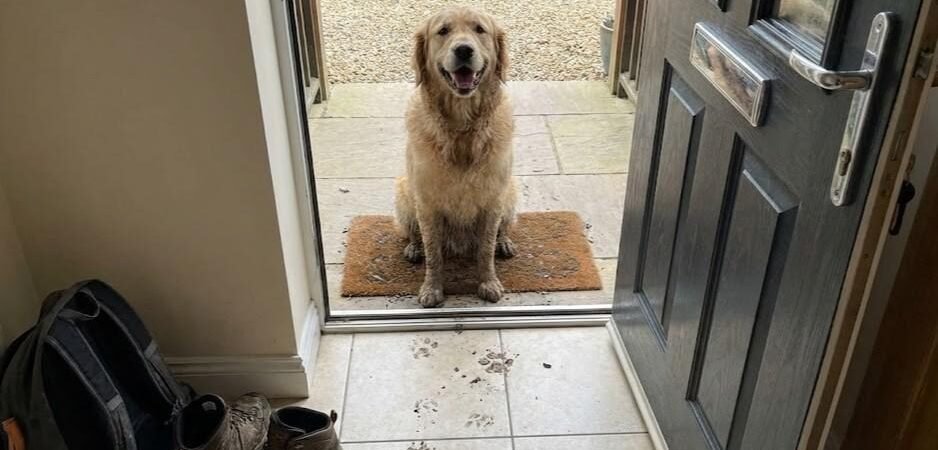
Keeping your entryway clean with a muddy dog can feel like a losing battle after rainy walks, wet grass, or an enthusiastic run through the yard. Mud doesn’t stay neatly on your dog’s paws either. It can cling to the lower legs, belly, coat, leash, and harness before being transferred onto floors, walls, rugs, and furniture.
The most effective solution isn’t cleaning the entire house more often. It’s creating a small transition area where you can stop your dog, remove the worst of the mud, dry their paws and coat, and deal with wet walking gear before any of it travels farther.
You don’t need a dedicated mudroom or dog-washing station to make this work. Even a small entrance can become an effective cleanup zone with two well-placed mats, a few towels, basic paw-cleaning supplies, and a consistent after-walk routine. Here’s how to build a practical system that keeps most muddy mess close to the door.
Create a Muddy-Dog Entryway Zone
The easiest way to control muddy paws is to create one small area where your dog stops before moving farther into the house. Think of it as the transition between outdoors and your main living space. Start with a durable mat outside the door to catch some of the loose dirt and moisture, then place a washable mat or runner immediately inside where your dog can stand while you clean and dry them.
Using two surfaces gives you two opportunities to intercept the mess rather than expecting one doormat to do everything. More importantly, the indoor mat gives your dog a clearly defined place to wait while you remove walking gear and check their paws.
Keep towels and basic cleanup supplies within reach rather than storing them elsewhere in the house. Wet leashes and harnesses should also have somewhere to go instead of being dropped onto the floor. If you have enough space for a more permanent setup, our dog-friendly mudroom ideas show how to organize a dedicated utility entrance. For a smaller or more general entrance, these dog-friendly entryway ideas cover compact storage and everyday organization.
The system doesn’t need to be elaborate. In fact, the simpler it is, the more likely you are to use it after every wet walk.
7 Things Every Muddy-Dog Entryway Needs
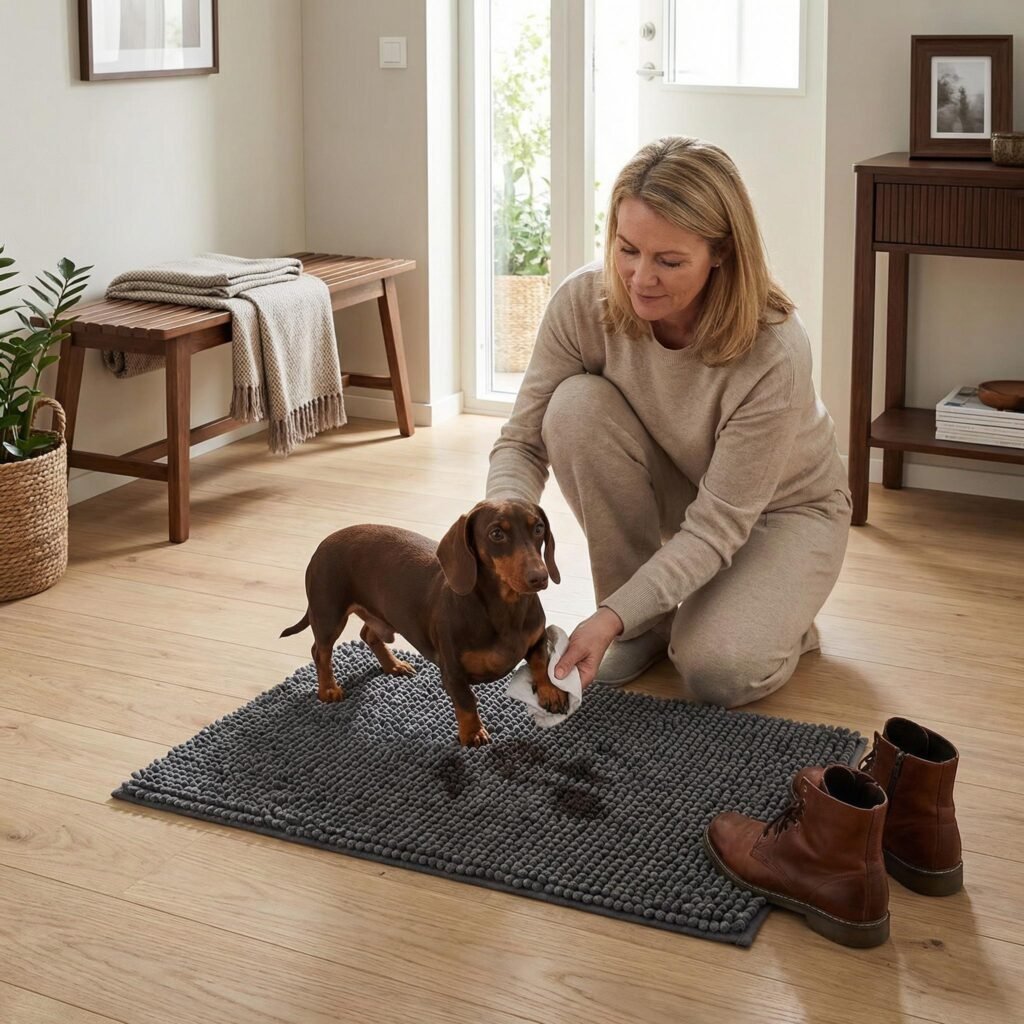
You don’t need to fill the entrance with dog equipment to control mud effectively. A handful of useful items positioned where the mess happens will usually accomplish more than a large collection of cleaning products stored somewhere else.
1. A Durable Mat Outside the Door
Start with a mat immediately outside the entrance your dog uses most often. Its job is to catch some loose dirt and moisture before your dog crosses the threshold, reducing the amount that reaches the indoor cleanup area.
Choose something suitable for outdoor use and easy to clean according to its care instructions. During prolonged wet weather, check underneath it occasionally rather than allowing trapped moisture and dirt to remain unnoticed.
Don’t expect the outdoor mat to leave paws clean. Think of it as the first stage of the system rather than the entire solution.
2. A Washable Mat Just Inside
Place a second washable mat or runner immediately inside the door. This is where your dog can wait while you remove the leash, inspect their paws, and deal with any remaining dirt.
Choose a size that gives your dog enough room to stand comfortably without immediately stepping onto the surrounding floor. A stable, non-slip option is useful on smooth flooring, particularly when you’re handling an excited wet dog.
Because this mat will collect mud regularly, easy cleaning matters more than choosing something decorative and difficult to maintain. Follow the manufacturer’s washing instructions and make sure the mat and its backing are suitable for the flooring underneath.
3. A Simple Paw-Cleaning Station
Keep the supplies you actually use for paw cleanup beside the entrance. For light dirt, a damp cloth or towel may be enough. Heavily muddy paws may require more thorough cleaning before they’re dried.
Pay attention to more than the visible surface of each paw. Dirt and debris can collect around the pads and between the toes. The American Kennel Club recommends checking these areas during paw cleaning and drying the paws thoroughly afterward. See AKC guide to cleaning and caring for dog paws.
Avoid turning the entrance into a cupboard full of unnecessary products. Water, appropriate dog-care products when needed, clean cloths, and absorbent towels may be enough for your normal routine.
4. A Basket of Clean Dog Towels
Keep several absorbent towels beside the door rather than relying on the household towels stored in another room. Use them for paws, lower legs, the belly, and wet sections of coat before your dog moves farther into the house.
Having several towels available means a muddy one can go straight into the laundry without leaving you unprepared for the next walk. If towel storage itself is becoming untidy, this is also a natural place to connect the routine with a dedicated dog-towel system rather than letting clean and used towels become mixed together.
Store clean towels somewhere dry and keep used wet towels separate until they’re washed. A basket may work for clean supplies, but damp towels shouldn’t be left bundled together in it.
5. A Designated Waiting Spot
A cleanup station works much better if your dog learns that coming through the door means pausing briefly rather than immediately running into the house. The indoor mat can double as this waiting spot.
The goal isn’t to keep your dog standing there for a long period. You simply need enough time to remove walking gear, check their paws and coat, and clean anything that’s obviously muddy. Keeping the routine calm and consistent makes the whole process more predictable.
This is particularly useful when several people walk the dog. Everyone follows the same sequence instead of deciding what to do only after muddy paw prints have already reached the hallway.
6. Storage for Wet Leashes and Walking Gear
Leashes, harnesses, raincoats, and other outdoor equipment can carry plenty of water and dirt of their own. Give wet gear a designated place rather than dropping it onto the floor or carrying it through the house.
Hooks can work well for items that need to hang, while a washable container can hold appropriate dirty gear temporarily. Allow damp equipment to dry according to its care instructions before putting it into closed storage.
For the everyday organization side of this setup, our dog leash storage ideas cover wall hooks, baskets, closet storage, and compact options for smaller homes.
7. Easy-to-Clean Surfaces Around the Entrance
The area immediately around the door receives more mud, moisture, and cleaning than most other parts of the house. Durable, easy-care surfaces therefore make a noticeable difference over time.
This doesn’t mean renovating your entrance purely for the dog. Start with what you already have and protect the surfaces that actually become dirty. A washable runner can reduce direct floor contact, while a suitable washable wall finish or targeted lower-wall protection can help where a wet dog repeatedly brushes against the same surface.
If wall splashes and muddy fur are a recurring problem, our guide to protecting walls from muddy dogs covers those high-contact areas in more detail. For broader floor maintenance beyond the entrance, see how to keep floors clean with dogs.
A Simple After-Walk Routine for Muddy Dogs
Having the right supplies helps, but the routine is what makes the setup work. Cleaning your dog in the same place and in roughly the same order after messy walks prevents you from improvising while mud is already being tracked through the house.
Step 1: Stop Your Dog at the Entryway
Bring your dog onto the designated indoor mat and pause there before moving farther inside. Even paws that don’t look heavily muddy may still be carrying water, fine dirt, sand, or other outdoor debris.
This is why positioning matters. If towels and cleaning supplies are already beside you, there’s no need to leave a wet dog standing unattended while you search the house for something to dry them with.
Step 2: Remove the Worst Mud First
If your dog’s paws and lower legs are heavily coated in mud, remove the excess before trying to dry them. Light dirt may come away with a damp cloth, while a particularly muddy walk may require a more thorough paw wash.
Work gently and check between the toes and around the paw pads instead of only wiping across the bottom of the foot. AKC’s paw-care guidance specifically notes that dirt can accumulate between the toes and around the pads and recommends inspecting these areas while cleaning.
If you notice cuts, irritation, or another paw problem while cleaning, don’t treat it simply as an entryway-cleaning issue. Paw cleaning provides a useful opportunity to notice when something may need appropriate veterinary attention.
Step 3: Dry the Paws and Legs
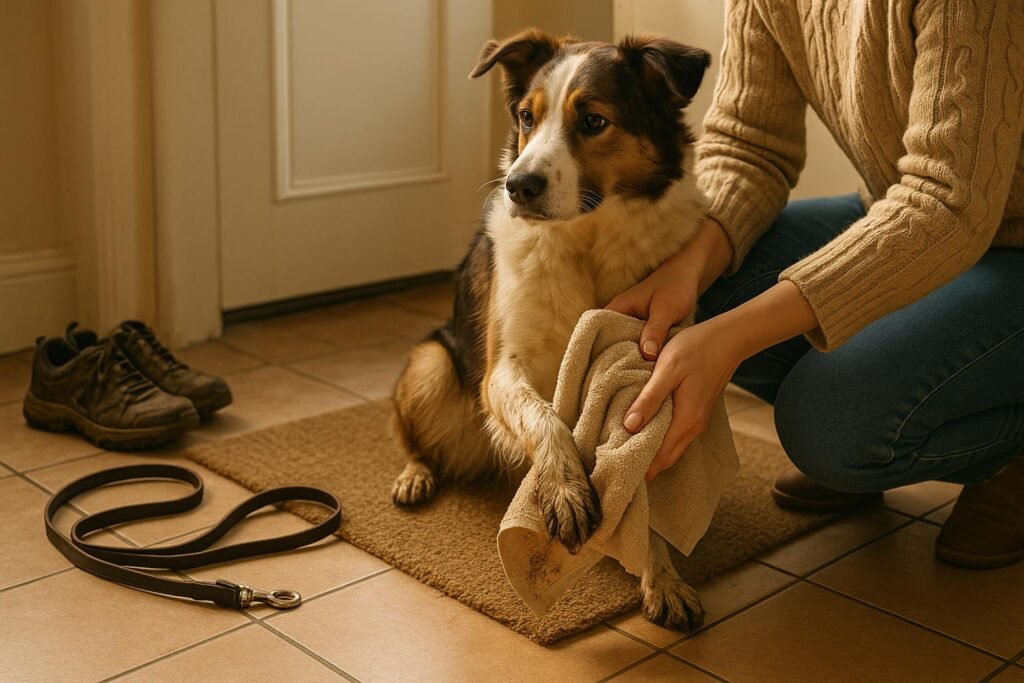
Once the visible dirt has been removed, dry each paw thoroughly with a clean absorbent towel. Check the lower legs and underside of the body as well, particularly after walks through puddles, wet grass, or deeper mud.
Drying matters even when the paws look clean. AKC notes that a towel can help dry clean but wet paws and recommends thorough drying after washing. Wet paws released straight onto the floor can still leave a trail through the house.
This is also where your entrance routine connects naturally with general floor care. Stopping moisture at the door is much easier than cleaning dog-related dirt from floors after it has traveled through several rooms.
Step 4: Check the Coat for Hidden Dirt
Before letting your dog leave the cleanup area, quickly check their belly, chest, legs, tail, and coat. Dogs with longer or thicker coats can carry wet dirt and small pieces of outdoor debris well beyond their paws.
If the coat is simply wet, a towel may be enough. If it needs more extensive cleaning or grooming, handle that appropriately rather than trying to complete an entire bath in a cramped entrance.
The purpose of this check is to catch the obvious mess before your dog shakes it onto a wall, rubs it against furniture, or settles onto a rug.
Step 5: Deal With Wet Walking Gear
Once your dog is clean, don’t forget the equipment. Remove wet or dirty leashes, harnesses, coats, and other walking gear and put them in the place you’ve designated for cleaning or drying.
Follow the care instructions for each item rather than putting wet equipment directly into closed storage. Keeping muddy gear at the entrance prevents the cleanup process itself from becoming another way dirt travels into the house.
Step 6: Release Your Dog and Reset the Area
Once your dog is reasonably clean and dry, let them leave the waiting area. Then spend another minute resetting the entrance while the mess is still contained.
Put used towels into the laundry, return supplies to the caddy, and deal with any obvious mud or standing water on the mat or surrounding floor. If walking gear is drying, make sure it isn’t dripping onto an unprotected surface.
This small reset is what keeps the system ready for the next walk. Leaving wet towels, muddy mats, and scattered equipment until later simply creates another cleanup job.
Keep a Muddy-Paw Cleanup Kit by the Door
You don’t need a cupboard full of products to keep your entryway clean with a muddy dog. A compact caddy or basket containing a few clean absorbent towels, washable cloths, and any appropriate dog-care supplies you regularly use should cover most ordinary walks.
Keep the kit focused on the things you genuinely reach for. If you regularly add products but never use them, move them somewhere else. The entrance needs to remain functional for people as well as the dog. For minor dirt, plain warm water on a washcloth can sometimes be enough.
Choose products intended or considered appropriate for pet use rather than assuming ordinary household wipes are suitable for your dog. Check the kit periodically, especially during rainy periods. Replace used towels, wash dirty cloths, and restock whatever you actually use so you’re not caught with an empty basket when the next muddy walk ends.
Common Mistakes When Managing a Muddy-Dog Entryway
One of the most common mistakes is expecting a single doormat to solve the entire problem. An outdoor mat can remove some loose debris, but it can’t inspect between toes, dry a wet belly, or stop a muddy leash from landing on the floor. A simple two-stage system—outside mat followed by an indoor waiting and cleanup area—is much more useful.
Another mistake is storing supplies too far from the door. The moment you have to leave a muddy dog to find a towel is often the moment those paw prints escape the entrance. Keep the handful of things you use regularly within reach and store less important supplies elsewhere.
Don’t overlook wet walking equipment either. Dropping a damp harness, leash, or coat onto the clean floor can undo some of the work you’ve just done. And avoid making the system so elaborate that nobody wants to use it. The most effective setup isn’t necessarily the one with the most storage or equipment; it’s the one your household can repeat quickly after every messy walk.
Finally, be sensible with cleaning and grooming products. Don’t assume a product is appropriate for use directly on your dog simply because it’s convenient. For household cleaning products used around pets, follow the product label and any safety directions about keeping animals away until surfaces are safe or dry. AKC likewise recommends reading cleaning-product labels and following their pet-safety directions. See AKC guidance on using cleaning products around dogs.
Frequently Asked Questions
How do I keep my entryway clean with a muddy dog?
Create a designated stopping point immediately inside the door with a washable mat, towels, and basic paw-cleaning supplies within reach. Clean and dry your dog’s paws and any obviously muddy areas before letting them move farther into the house, then deal with wet walking gear and reset the entrance. A short routine repeated consistently is usually more effective than cleaning mud after it has spread.
How do I stop my dog from tracking mud into the house?
Intercept the mess in stages. Use an outdoor mat to catch some loose debris, then an indoor washable mat as a waiting and cleanup area. Check the paws, remove visible mud, and dry them before your dog leaves the entrance. On very wet days, check the lower legs, belly, and coat as well.
What should I keep by the door for muddy dog paws?
A practical setup can be very simple: several absorbent towels, washable cloths, an easy-to-clean indoor mat, and whatever appropriate dog-care supplies you genuinely use for muddy paws. Keep clean supplies together in a basket or caddy and provide a separate place for used towels and wet walking gear.
What type of entryway mat is best for muddy dogs?
Look for something durable, easy to clean, appropriately absorbent for its intended location, and suitable for the surface underneath. Indoors, stability is particularly important because a mat that slides while you’re handling a wet dog creates another problem. Choose according to your entrance and follow the manufacturer’s cleaning instructions rather than assuming every washable mat is suitable for every floor.
What should I do when my dog comes home completely covered in mud?
Keep your dog in the designated cleanup area and remove the worst mud before letting them into the main house. A very muddy dog may need more thorough cleaning than a towel can provide. Clean the paws and other dirty areas appropriately, dry your dog thoroughly, and only then let them leave the entrance. AKC notes that particularly dirty paws may require washing rather than a quick wipe.
How can I keep the entryway from smelling damp?
Don’t leave wet towels, mats, or walking equipment bundled together after cleanup. Launder towels, clean mats according to their care instructions, and allow damp gear to dry appropriately before putting it into closed storage. The entryway should function as a cleanup point, not as permanent storage for wet equipment.
Final Thoughts
Learning how to keep your entryway clean with a muddy dog is mostly about stopping the mess before it gains momentum. A durable outdoor mat catches the first layer of dirt, a washable indoor mat gives your dog somewhere to wait, and towels and paw-cleaning supplies within reach let you deal with the remaining mud before it reaches the rest of the house.
Keep the system simple enough to use after every wet walk. Clean and dry your dog, put wet walking gear where it belongs, reset the entrance, and move on. You may still get the occasional muddy paw print that comes with sharing a home with a dog but containing most of the mess at the door means far less cleaning everywhere else.