Protecting walls from muddy dogs doesn’t have to mean constantly wiping down every room or covering your home in protective panels. Most dog-related wall mess happens in predictable places: beside the door after a wet walk, along a narrow hallway, around corners, or anywhere a damp dog regularly brushes against the wall.
The most effective approach is therefore to stop as much mud and moisture as possible at the entrance, then make the few high-contact wall areas easier to clean and protect. A drying spot near the door, washable finishes, targeted lower-wall protection, and a little attention to your dog’s usual route through the house can make a significant difference.
Here are nine practical ways to protect walls from muddy dogs while keeping your home comfortable and looking like a home rather than a cleanup zone.
Why Dogs Leave Dirt and Mud on Walls
Most muddy wall marks aren’t random. A wet dog comes through the door and shakes, turns around in a narrow entrance, brushes against a hallway wall, or settles beside a surface while their coat is still damp. Lower walls, corners, trim, and baseboards often take the worst of it because they’re closest to muddy paws, wet fur, and wagging tails.
That means you probably don’t need to protect every wall in your home. Start with the entrance your dog normally uses, then follow the route they take afterward. Look for muddy splashes, darker patches, paw marks, or areas that require noticeably more cleaning than the rest of the room. Once you know where the mess actually occurs, you can concentrate your effort there.
1. Create a Drying Zone Near the Door
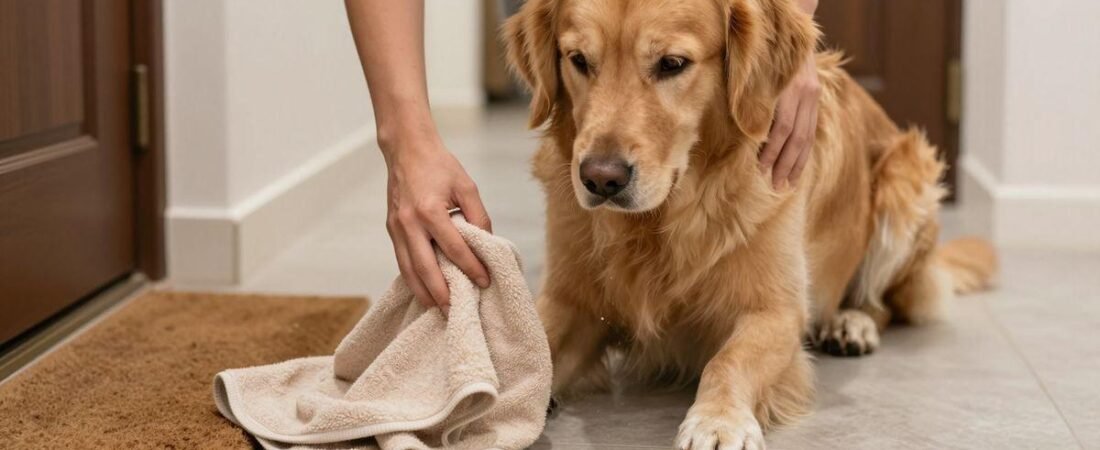
The easiest wall to clean is the one your muddy dog never reaches. If your dog tends to shake as soon as they come home from a wet walk, create a small pause-and-dry area immediately inside the entrance. An absorbent mat and a couple of towels within easy reach may be all you need.
Product option: A washable absorbent dog mat can help catch moisture, mud, and dirt at the entrance before your dog tracks it farther into the house.
You don’t need a large utility room for this to work. Even a small corner beside the door can become a useful cleanup point if you consistently stop there before allowing your dog farther into the house. The key is positioning everything where you can reach it immediately; towels stored in another room aren’t particularly useful when a wet dog is already standing in the hallway.
If you do have a separate utility entrance, our dog-friendly mudroom ideas show how to organize the area around wet paws, towels, and outdoor dog gear without letting it become cluttered.
Best for: Dogs that regularly come home wet or muddy after walks and outdoor play.
2. Dry Your Dog Before They Brush Against the Walls
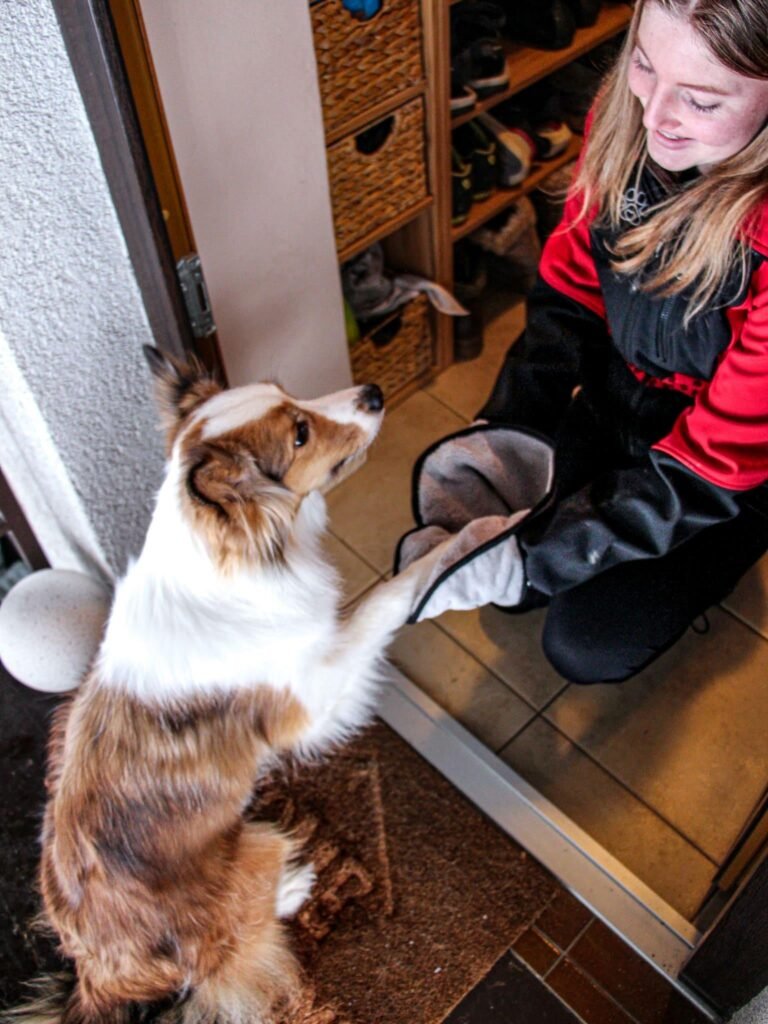
A quick towel-down after a wet walk can prevent a surprising amount of mess. Pay particular attention to your dog’s paws, lower legs, belly, and sides because these are the area’s most likely to transfer dirt and moisture onto walls and floors. If the paws are heavily muddy, clean them appropriately before drying rather than simply rubbing the mud farther into the coat.
Keep a dedicated towel near the entrance so this becomes part of the normal after-walk routine rather than something you have to organize each time. The American Kennel Club’s guidance on cleaning and caring for dog paws also recommends checking between the toes and around the pads for dirt and debris and drying paws thoroughly after cleaning.
Product option: A quick-dry microfiber dog towel can make it easier to dry wet paws, legs, and fur before your dog moves through the house.
This one habit helps with more than wall marks. Drying paws before your dog moves through the house is also one of the most effective ways to keep floors clean with dogs during rainy and muddy weather.
Best for: Rainy days, muddy walks, and dogs whose coats hold a lot of moisture.
3. Use Washable Paint in High-Traffic Dog Areas
If you’re repainting an entryway, hallway, or another area your dog regularly passes through, think about cleanability as well as color. A durable finish that’s suitable for regular wiping can make muddy splashes, light scuffs, and everyday marks much easier to deal with.
Paint sheen can matter too. Sherwin-Williams notes that flat and matte finishes are generally less durable during cleaning than satin and semi-gloss finishes, so lower-sheen walls may require gentler treatment. Its current cleaning guidance recommends mild soap and warm water for general washing, using a soft cloth or sponge, avoiding excessive water, and testing your cleaning method in an inconspicuous area first. See Sherwin-Williams: How to Clean Painted Walls
You don’t necessarily need to repaint the entire house. If one hallway or entrance repeatedly becomes dirty, upgrading the finish in that specific area may deliver most of the benefit without turning wall protection into a major decorating project.
Best for: Entryways, hallways, and painted walls that require frequent wiping.
4. Protect the Lower Part of the Wall
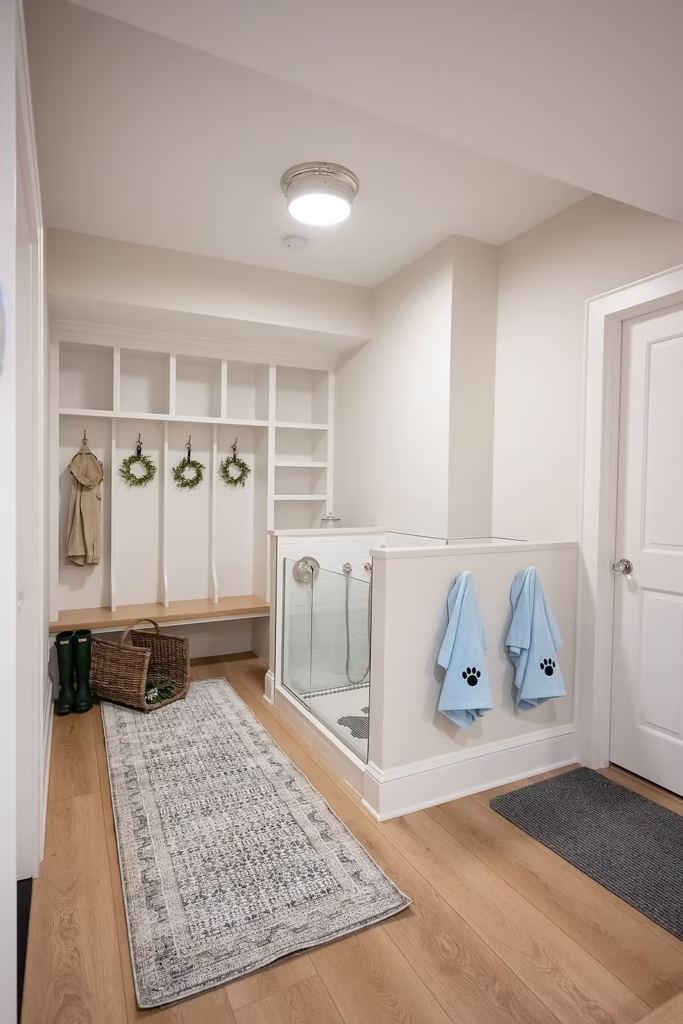
Most dog-related wall mess happens relatively close to floor level, so protecting the lower portion of a problem wall can be more practical than changing the entire surface. Wainscoting, suitable washable wall panels, tile, or another easy-care finish can create a more durable barrier where muddy fur repeatedly makes contact.
This works particularly well beside entrances, along narrow passages, and next to areas where your dog regularly sits or sleeps. Instead of treating lower-wall protection as something purely functional, choose a material and finish that fits the room. Well-planned wainscoting or paneling can look like an intentional part of the design while also making everyday cleanup easier.
Focus on repeat problem areas rather than automatically installing protection around an entire room. If only a short stretch of hallway gets dirty, that’s the section worth addressing first.
Best for: Lower walls that repeatedly become dirty despite regular entrance cleanup.
5. Don’t Forget Baseboards
Baseboards sit in exactly the right position to collect muddy paw marks, damp fur, dust, and loose hair, yet they’re easy to overlook when you’re thinking about wall protection. In high-traffic dog areas, include them in your normal cleanup rather than waiting until grime has built up.
Pay particular attention to corners, doorways, and narrow passages where your dog turns around or waits to go outside. These areas often collect more dirt than the middle of a long wall. If you’re already redecorating, durability and cleanability are worth considering for trim and baseboard finishes as well as the wall itself.
There’s little benefit in protecting the wall beautifully while leaving the lowest few inches difficult to maintain. Treat the wall, trim, and baseboard as one high-contact area.
Best for: Busy entrances, narrow hallways, and multi-dog homes.
6. Use a Washable Barrier in the Messiest Spots
Sometimes one small section of wall receives nearly all the abuse. A dog may always shake beside the same doorway, rub against the same corner, or sleep with their coat touching the same section of wall. In that situation, protecting the individual trouble spot can be more sensible than changing the whole room.
A suitable washable panel, wipeable wall surface, or removable protective covering can provide an extra barrier between muddy fur and the underlying finish. Choose a product designed for the surface you’re attaching it to and follow the manufacturer’s installation and cleaning instructions.
Product option: A clear removable wall protector can add a wipeable barrier in small areas that regularly get splashed or rubbed by muddy fur.
This targeted approach can also be useful in rentals, although removable doesn’t automatically mean damage-free. Check your lease where necessary and make sure any adhesive or fixing method is appropriate for the existing wall finish before installing it.
Best for: Small, predictable sections of wall that become dirty repeatedly.
7. Keep Narrow Hallways and Dog Routes Clear
Sometimes the wall isn’t the real problem; the route through the room is. Watch what your dog does immediately after coming inside. If they have to squeeze between shoes, bags, furniture, baskets, or other obstacles, they’re much more likely to brush a wet coat against the nearest wall.
Creating a little more clearance can reduce contact without adding any protective material at all. This is particularly useful in apartments, narrow hallways, and compact entrances where a few misplaced items can significantly reduce the available walking space.
Keep frequently used walking equipment organized rather than allowing it to collect around the door. If tangled leads and harnesses are part of the problem, these dog leash storage ideas provide several compact ways to keep everyday walking gear accessible without taking over the entrance.
Best for: Small homes, apartments, and narrow entrances where dogs regularly brush against walls.
8. Clean Mud Marks Before They Build Up
Even a well-designed setup won’t prevent every muddy splash. When marks do appear, dealing with them before layers of dirt accumulate can make routine maintenance much easier. The important part is cleaning in a way that’s appropriate for the particular wall finish rather than automatically reaching for a strong cleaner or abrasive sponge.
For painted surfaces, check the paint manufacturer’s care instructions first. Sherwin-Williams recommends non-abrasive cleaning and says mild soapy water will generally be sufficient for maintenance cleaning, while unfamiliar cleaning solutions should be tested on an inconspicuous area before being used more widely.
Keeping a suitable cloth with your entrance-cleaning supplies can make small marks easy to deal with as part of the normal post-walk routine. Just avoid repeatedly scrubbing a finish that isn’t designed for it; if the same section requires constant cleaning, a more durable finish or targeted barrier may be the better long-term solution.
Best for: Every dog-friendly home, because no prevention method catches everything.
9. Protect the Areas That Actually Get Dirty
Before buying wall panels, repainting several rooms, or covering every lower wall, spend a little time noticing exactly where your dog leaves marks. In many homes, the problem is concentrated around one entrance, a short stretch of hallway, a corner beside a dog bed, or another predictable contact point.
Start with the worst location and use the simplest appropriate solution. That may be an absorbent mat and towel station if the problem starts with wet paws, a washable finish if the wall needs frequent wiping, or a small protective surface if the same spot is repeatedly rubbed or splashed.
You can always add more protection later. The objective isn’t to create a spotless home where your dog can’t behave naturally; it’s to make recurring mess easier to contain and quicker to clean without making unnecessary changes elsewhere.
Best for: Anyone who wants an effective solution without overhauling the entire house.
Best Wall Surfaces for Homes With Muddy Dogs
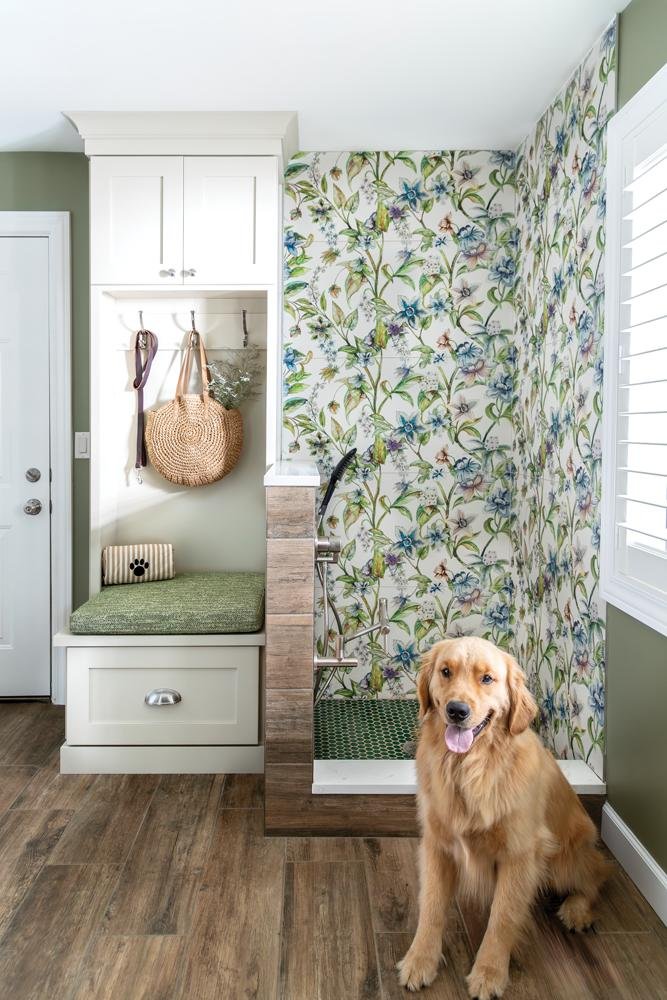
If muddy wall marks are a recurring problem, choosing an easier-to-maintain surface can reduce the amount of work involved. There’s no need to change every wall; prioritize entrances, narrow hallways, cleanup zones, and other places where your dog regularly makes contact.
Washable Paint
Washable paint is often the least disruptive option because you don’t have to add another material to the wall. Look at the manufacturer’s durability and cleaning guidance rather than relying on the word “washable” alone. Different products and sheens tolerate cleaning differently, and even a durable coating should be cared for according to its specific instructions.
For walls that receive frequent contact, it can be worth discussing the required durability and sheen with the paint manufacturer or retailer before choosing a product. This is particularly important if you’re balancing easy cleaning with the appearance you want elsewhere in the room.
Tile
Tile can work well on lower sections of wall that regularly receive water or muddy splashes, particularly around a dedicated dog-cleanup area. A suitable tiled surface is generally straightforward to wipe down, although grout and installation requirements mean it isn’t completely maintenance-free.
Because tiling is a considerably bigger project than repainting, it makes the most sense where moisture and mud are persistent problems rather than as a default solution throughout the house.
Wall Panels or Wainscoting
Wall panels and wainscoting can protect the lower section of a wall while looking like part of the room’s design. They’re particularly useful along hallways or beside doors where dogs repeatedly brush against the same surface.
Choose materials and finishes appropriate for the location and expected moisture exposure, and consider how they will actually be cleaned. A protective surface only saves time if maintaining that surface is easier than maintaining the wall it covers.
Common Mistakes When Protecting Walls From Dogs
One of the biggest mistakes is treating the entire room as the problem instead of identifying the few surfaces your dog actually touches. Watch where your dog enters, shakes, turns, sleeps, and passes through the house, then concentrate on those high-contact areas. This keeps the project smaller and usually produces a better result.
Another mistake is relying on aggressive cleaning instead of prevention. Repeated hard scrubbing or harsh products can damage some painted finishes, so follow the manufacturer’s care guidance and test unfamiliar methods first. If a wall becomes muddy every few days, improving the entrance routine or adding a durable surface may be more effective than continually cleaning the same paint.
Finally, don’t overlook the bottom of the wall. Baseboards, corners, trim, and the first few feet above floor level often receive far more contact than areas at eye level. Protecting those specific surfaces is usually more useful than adding elaborate solutions where your dog never actually goes.
Frequently Asked Questions
How do I stop my dog from getting mud on the walls?
Start at the entrance your dog normally uses. Place an absorbent mat inside the door, keep a towel within reach, and clean and dry muddy paws and wet fur before your dog moves through the house. If your dog tends to shake after wet walks, keeping them in the entrance cleanup area until they’re reasonably dry can prevent much of the splashing.
What wall finish is easiest to clean when you have dogs?
There isn’t one finish that’s automatically best for every room, but durability and washability matter in areas that receive regular dog contact. Sherwin-Williams notes that flat and matte finishes are less durable during cleaning than satin and semi-gloss finishes. Whatever paint or coating you choose, check its specific cleaning instructions before deciding how suitable it is for a high-traffic dog area.
How do I clean muddy dog marks off painted walls?
Start with the care instructions for the paint on your wall. For general painted-wall cleaning, Sherwin-Williams recommends mild soap and warm water with a soft cloth or sponge, gentle pressure, and avoiding excessive water. Test the method on an inconspicuous section first, particularly if you don’t know how durable the existing paint finish is.
How can I protect the bottom of my walls from dogs?
Focus on the sections that receive actual contact. A durable washable paint may be enough for occasional marks, while wainscoting, suitable wall panels, or tile may make sense in areas that repeatedly receive mud or moisture. Include baseboards and corners in the plan because these lower surfaces often become dirty before the main wall does.
Do I need to protect every wall in a dog-friendly home?
Usually not. Most wall mess occurs along predictable routes and at specific contact points. Start with the entrance, narrow passages, corners, and places where your dog rests against the wall. Targeting those areas is generally less expensive, less intrusive, and easier to maintain than changing every wall in the house.
Final Thoughts
Learning how to protect walls from muddy dogs is mostly about controlling mud before it spreads and strengthening the few surfaces that receive repeated contact. Start at the door by cleaning and drying wet paws and fur, then look at your dog’s normal route through the house to identify the walls, corners, and baseboards that actually become dirty.
From there, choose the least complicated solution that solves the problem. That may be a better drying routine, a washable paint finish, a small protective panel, lower-wall wainscoting, or simply clearing enough space so your dog doesn’t brush against the hallway every time they come inside. A targeted system is easier to maintain, less expensive, and far more practical than trying to protect every wall in your home.