Wondering how to keep your dog’s water bowl area dry? Start by looking at how your dog creates the mess. Some dogs splash while drinking, others push or tip their bowls, and some drink neatly but walk away dripping water across the floor. The right fix depends on where the water is actually going.
For most homes, the simplest approach is to contain, absorb, and dry. Contain water around the bowl, absorb the moisture your dog carries beyond the drinking area, and dry any water that collects around or underneath the setup. You usually don’t need an elaborate feeding station; you need the right combination for your dog’s drinking habits.
First, Figure Out Where the Water Is Coming From
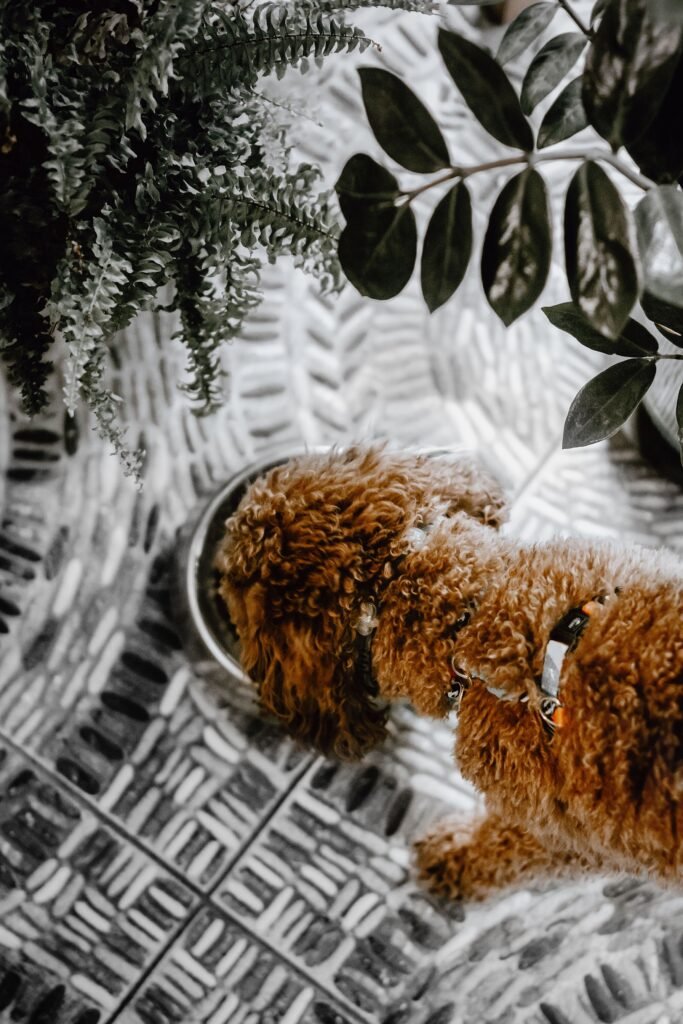
Before buying another bowl or mat, watch your dog drink a few times. Pay attention to what happens while they’re drinking and immediately afterward. The location of the water usually tells you more about the solution than the size of the puddle.
| What your dog does | Where you’ll usually find water | Try this first |
|---|---|---|
| Splashes while drinking | Immediately around the bowl | Waterproof mat + splash-resistant bowl |
| Walks away dripping | Trail leading away from the bowl | Absorbent walk-off mat |
| Pushes the bowl around | Scattered around the feeding area | Non-slip bowl or mat |
| Tips the bowl | Large puddle in one area | Wide, stable or heavier bowl |
| Soaks their beard or jowls | Around the bowl and walking path | Splash-resistant bowl + nearby towel |
| Paws at the water | Larger, unpredictable splash zone | Stable bowl + raised-edge tray |
| Leaves moisture underneath the mat | Hidden between the mat and floor | Regular lifting and drying |
You may need more than one solution. A dog with loose jowls, for example, may benefit from a splash-resistant bowl and an absorbent mat positioned along the path they normally take after drinking. That’s why simply buying the biggest feeding mat you can find isn’t always the answer.
1. Put a Large Waterproof Mat Under the Water Bowl
If you’re trying to figure out how to keep your dog’s water bowl area dry, a properly sized waterproof mat is one of the simplest places to start. The key is choosing one that protects the actual splash zone rather than only the space directly underneath the bowl.
A mat that extends only an inch or two beyond the bowl may catch occasional drips without protecting the surrounding floor. Watch where the water normally lands and choose a mat that extends comfortably beyond that area. For dogs that create small puddles, a waterproof mat with a raised outer edge can also help stop water from running onto the floor.
Think about stability as well. A mat that slides every time your dog drinks can spread the mess farther across smooth flooring. A non-slip base helps keep the entire setup in place. Water bowls are only one source of everyday floor mess, so for a broader cleaning routine, see our guide on how to keep floors clean with dogs.
Don’t Forget to Check Underneath
A waterproof mat can still trap water underneath. A splash may run over the edge, moisture can work underneath when the mat shifts, or water may get underneath during cleaning. Lift the mat regularly, check the floor, and allow both surfaces to dry when necessary. The goal isn’t simply to hide the water; it’s to keep the floor dry.
2. Try a Splash-Resistant Water Bowl
If the mess happens while your dog is actually drinking, changing the bowl may help more than making the mat bigger. Splash-resistant or spill-resistant bowls use different designs to reduce how easily water can be pushed over the edge. Some have inward-facing rims, while others use a floating disc or restricted opening that reduces the amount of exposed water.
These designs can be useful for dogs that plunge their muzzle into the bowl or drink enthusiastically enough to send water over the sides. Match the bowl to the problem, though. If your dog drinks neatly and then walks across the kitchen dripping from their mouth, a splash-resistant bowl may reduce some mess around the station without solving the trail across the floor.
Any new bowl should be comfortable for your dog to use, stable enough for their drinking style, and easy to clean. If it has a floating disc or other removable parts, make sure those components can also be cleaned thoroughly.
3. Use a Tray With Raised Edges for Bigger Spills
For a dog that regularly creates a puddle rather than a few droplets, a shallow waterproof tray can provide more containment than a completely flat mat. A flat mat protects the surface underneath, while a raised edge can help prevent collected water from immediately spreading onto the surrounding floor.
This setup can be especially useful for dogs that paw at their water, splash heavily, or occasionally knock a significant amount over the side. Choose a tray that gives the bowl enough room without forcing your dog to stand awkwardly. It should also be stable and easy to lift and clean.
A tray still needs regular attention. If enough water collects inside it, your dog may step into the puddle and track that moisture elsewhere. Empty standing water and allow the tray to dry rather than treating it as permanent storage for spills. For serious splashers, think of the tray as the contain part of the system rather than the entire solution.
4. Stop the Water Bowl From Sliding
Sometimes the water isn’t the biggest problem; the moving bowl is. A lightweight bowl can creep across tile, vinyl, laminate, or hardwood as your dog drinks, spreading droplets beyond the original water station.
Before replacing anything, check whether the bowl itself, the mat underneath it, or both are sliding. A bowl with a non-slip base, a rubber or silicone feeding mat, or a wider and heavier bowl may provide enough stability to keep the setup in place.
If this is your main problem, see our guide on how to stop dog bowls sliding around the floor for more ways to stabilize the feeding area. Fixing the movement first can also reduce how far water spreads.
5. Create a Walk-Off Zone for Dogs That Drip
This is the solution many messy-drinker setups miss. Some dogs barely splash at the bowl. Instead, they lift their head, turn away, and leave a trail of water behind them.
If that sounds familiar, watch where your dog walks immediately after drinking. Rather than putting all your floor protection underneath the bowl, place a washable absorbent mat or runner along the first part of that path. If your dog always turns toward the living room, for example, extending the protected area in that direction may be more useful than placing an enormous square mat around the bowl.
This approach is particularly useful for dogs whose facial hair, lips, or jowls hold water after they drink. The waterproof mat around the bowl handles the splash, while the absorbent walk-off area handles the drip. Choose something washable with a secure backing so it doesn’t create a slipping or tripping hazard.
6. Keep a Dog Towel Near the Water Station
For dogs that regularly leave the bowl with a noticeably wet face, sometimes the simplest solution is a towel. Keeping a dedicated dog towel close to the water station makes it easy to wipe a wet muzzle before the water reaches the floor, furniture, or walls.
Give the towel a convenient home, such as a nearby hook or small basket, and allow it to dry properly between uses. This can be particularly practical for dogs with longer facial hair or loose jowls that carry more water away after drinking.
You don’t need to wipe your dog after every sip. The towel is simply there for those especially messy drinks when their face is noticeably wet.
7. Don’t Fill the Bowl Right to the Top
A bowl filled almost to the rim leaves very little room for the water to move when your dog starts drinking. If your dog is an enthusiastic drinker, normal movement can push water over the edge before they’ve done anything particularly messy.
Leaving some clearance below the rim may reduce minor overflow, but this should never be used to restrict how much water your dog can drink. Dogs should continue to have access to fresh water, and their bowls should be cleaned regularly. Choose a bowl with enough capacity for your dog and refill it as needed rather than relying on a small bowl filled right to the top.
If you notice a significant or unexplained change in how much your dog is drinking or urinating, treat that separately from ordinary messy drinking. A noticeable change can have medical causes and is worth discussing with your veterinarian.
8. Move the Water Station to an Easier-to-Clean Spot
Sometimes the easiest solution has nothing to do with the bowl. A water station sitting on a vulnerable surface or in the middle of a busy walkway may create more work than the same setup positioned a few feet away on an easier-to-clean floor.
Depending on your home’s layout, practical locations may include a tiled section of the kitchen, a laundry or utility area, a mudroom, a protected kitchen corner, or another water-resistant surface. The goal is to make ordinary spills easier to manage without making the water inconvenient for your dog to reach.
Accessibility still matters. Avoid hiding the bowl somewhere you won’t notice spills or remember to clean and refill it. In a small home, the best location usually balances accessibility, floor protection, and available walking space.
If you’re comparing surfaces for dog-heavy areas of the home, our guide to the best flooring for dogs looks at practical options for cleaning, scratches, moisture, and traction.
9. Lift the Mat and Dry Underneath Regularly
This final step may be the least exciting, but it’s one of the most important parts of how to keep your dog’s water bowl area dry. A floor can look perfectly dry around the bowl while moisture sits unnoticed underneath the mat.
Make checking underneath part of your normal cleaning routine:
- Wipe up visible spills.
- Lift the mat or tray.
- Check the underside for moisture.
- Dry the floor completely if needed.
- Clean and dry the mat.
- Put everything back only when the area is dry.
How often you need to do this depends on how messy your dog is and how much water the setup catches. If you repeatedly find moisture underneath, look for the cause rather than simply increasing the cleaning schedule. The mat may be too small, it may be shifting, water may be overflowing an edge, or your dog may be stepping in collected water and carrying it underneath.
Which Setup Is Best for Your Messy Drinker?
There isn’t one answer for every dog because a dog that splashes needs a different setup from one that walks away dripping. Start with the problem your dog actually has.
| Your problem | A practical setup to try |
|---|---|
| Occasional light splashing | Large waterproof mat + stable bowl |
| Heavy splashing | Splash-resistant bowl + raised-edge mat or tray |
| Bowl keeps moving | Non-slip mat + stable bowl |
| Dog walks away dripping | Waterproof bowl mat + absorbent walk-off runner |
| Wet facial hair or jowls | Splash-resistant bowl + nearby towel |
| Dog paws at the water | Stable bowl + larger contained splash zone |
| Hardwood flooring | Waterproof containment + frequent checks underneath |
| Water appears under the mat | Larger protection area + regular lifting and drying |
Start simple. If a larger non-slip mat solves the problem, there is no reason to turn your dog’s water station into an elaborate project. Add another layer only when you know what the first solution isn’t catching.
How to Protect Hardwood Floors Around a Dog Water Bowl
Learning how to keep your dog’s water bowl area dry becomes especially important on hardwood flooring, where repeated moisture can cause more than a temporary mess. The National Wood Flooring Association’s wood-flooring guidance discusses moisture-related damage ranging from changes in the shape of flooring to more serious problems such as buckling.
Start with a waterproof barrier large enough to cover the normal splash zone. For a heavier splasher, a raised-edge tray may provide better containment, while an absorbent walk-off mat can catch water carried away from the bowl.
The most important habit is checking underneath the protection. Don’t assume the floor is dry simply because the top of the mat looks dry. If water repeatedly reaches beyond the protected area, increase the containment zone or reconsider the location of the water station rather than allowing the floor to become wet again and again.
What If Your Dog Drips Water Across the Whole Room?
If you’ve already bought a large mat and still find droplets several feet away, the mat probably isn’t failing. It’s solving the wrong problem. Watch your dog after they finish drinking. If they lift their head and immediately begin dripping as they walk away, focus on the route they take rather than making the area directly underneath the bowl enormous.
A simple three-part setup can work well:
- A contained drinking station to catch splashes around the bowl.
- An absorbent walk-off mat or runner along the first part of your dog’s usual path.
- A nearby towel for especially wet faces, beards, or jowls.
You can also try an appropriate splash-resistant bowl if your dog’s current bowl leaves their muzzle unusually wet. The key is to protect the area where the water actually goes, not where you expect it to stay.
Common Mistakes That Keep the Water Bowl Area Wet
One common mistake is buying a feeding mat before figuring out how the dog creates the mess. A larger mat helps when water lands around the bowl, but it does very little for a dog that carries water several feet away.
Another is assuming that waterproof means maintenance-free. Water can travel over an edge or underneath a mat and remain hidden, so check the floor rather than cleaning only what you can see.
Don’t assume every problem requires a new bowl either. A splash-resistant design can help when water is pushed over the rim, but it won’t necessarily solve sliding, tipping, or a dripping trail. Match the solution to the cause instead of adding equipment at random.
Frequently Asked Questions
What can I put under my dog’s water bowl to protect the floor?
A large waterproof, non-slip mat is a good starting point for most dogs. For heavier spills, a waterproof tray or mat with raised edges can help contain water. If your dog walks away dripping, add a washable absorbent runner along their usual path.
Are silicone mats good under dog water bowls?
Silicone mats can work well because they’re waterproof, washable, and often provide useful grip on smooth floors. Choose one large enough for your dog’s actual splash zone and lift it regularly to make sure water isn’t sitting underneath.
How do I stop my dog from splashing water everywhere?
First determine how the splash happens. If your dog pushes water over the edge while drinking, a splash-resistant bowl may help. If they paw at the water or tip the bowl, stability and a larger contained area may matter more. Heavy splashers may benefit from combining the right bowl with a raised-edge mat or tray.
How do I keep hardwood floors dry around a dog water bowl?
Use a waterproof containment layer large enough to cover the normal splash zone and check underneath it regularly. For larger spills, consider a raised-edge tray. If your dog carries water away from the bowl, an absorbent walk-off area can protect the surrounding floor as well.
Why does my dog drip so much water after drinking?
Some dogs carry more water away from the bowl around their lips, facial hair, or jowls. If most of the mess appears after your dog walks away, focus on an absorbent walk-off area and a convenient towel rather than continually increasing the size of the bowl mat.
Why is there water underneath my dog’s feeding mat?
Water may be running over the edge, traveling underneath when the mat moves, or being carried there on wet paws. Lift and dry the mat, then watch your dog drink to determine how the moisture is getting underneath. A larger or more stable containment area may solve the underlying problem.
Is a splash-resistant bowl better than a feeding mat?
They solve different problems. A splash-resistant bowl reduces the amount of water leaving the bowl, while a waterproof feeding mat protects the floor from water that does escape. For a heavy splasher, using both may provide better protection than relying on either one alone.
Final Thoughts
Keep It Simple: Contain, Absorb, and Dry
Learning how to keep your dog’s water bowl area dry starts with identifying where the mess actually begins. A dog that splashes needs a different setup from one that pushes the bowl around or walks across the room dripping. Keep the solution simple. Contain water around the bowl with a properly sized mat, stable bowl, or raised-edge tray. Absorb the moisture your dog carries beyond the drinking station. Then dry the area regularly, including underneath waterproof mats. You don’t need every fix in this guide. Start with the simplest one that matches your dog’s drinking habits and add another layer only if water is still escaping. If the bowl itself keeps moving while your dog drinks, read our guide on how to stop dog bowls sliding around the floor next.