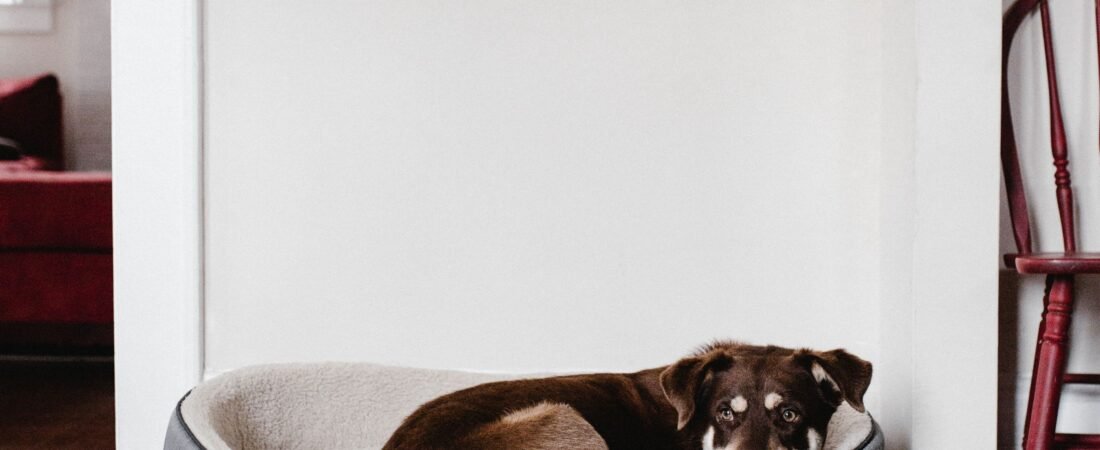
If you’re trying to work out how to stop a dog bed sliding on hardwood floors, you probably don’t need to replace the bed. Lightweight beds can shift whenever a dog steps onto them, circles before settling, or pushes against the edge to stand up. On smooth wood flooring, even a small movement can send the whole bed several inches across the room.
The simplest fix is usually to improve the grip underneath the bed. Cleaning the floor and the bed’s existing base may be enough. If it still moves, a hardwood-compatible rug pad, low-profile anti-slip mat, existing area rug, or better position can usually stabilize it without permanently attaching anything to the floor.
Disclosure: This post contains affiliate links. If you make a purchase through these links, we may earn a commission at no extra cost to you.
Quick Answer: How Do You Stop a Dog Bed From Sliding?
First, clean and dry both the hardwood floor and the underside of the dog bed. Hair, dust, and fine grit can reduce the grip of an existing textured or non-slip base. If the bed still slides, place a floor-compatible non-slip rug pad or thin anti-slip mat underneath it.
Other options include:
- moving the bed partly onto an existing rug
- checking whether the bed’s original grip backing has worn away
- moving the bed out of an open walkway and into a more stable resting position
- placing a very lightweight bed on a larger washable base
- choosing a bed with a suitable non-slip underside when replacement is eventually necessary
Before putting any pad, mat, or backing directly on hardwood, check that the material is compatible with your particular flooring and finish.
Why Do Dog Beds Slide on Hardwood Floors?
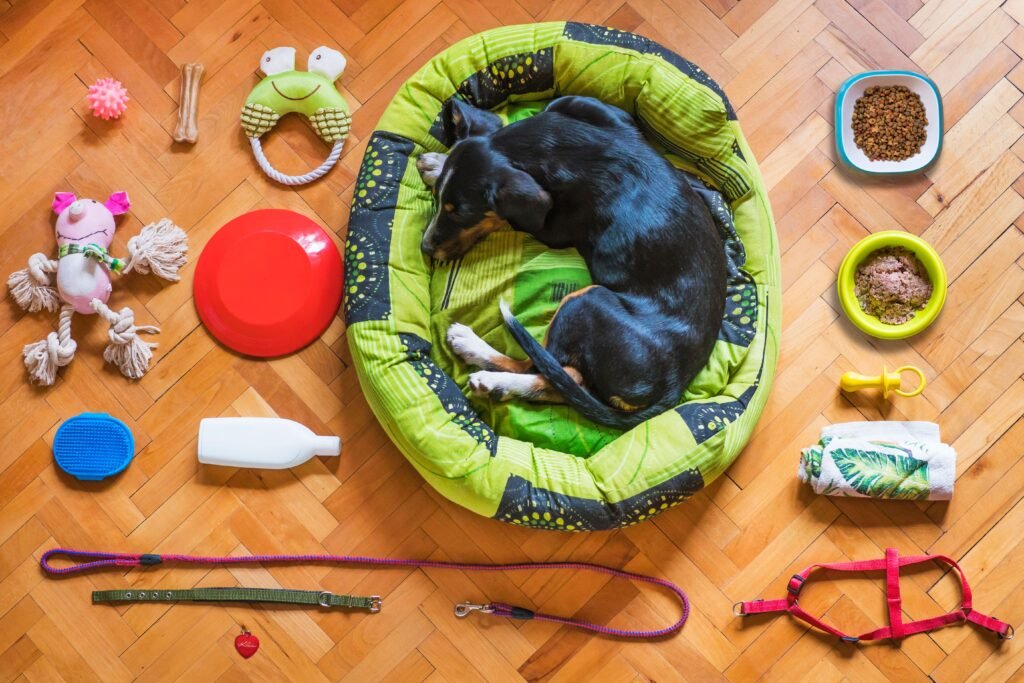
The problem is mostly friction. Hardwood has a comparatively smooth finished surface, while many dog beds have lightweight fabric or synthetic bases. When your dog puts weight on one edge, turns around, digs at the bedding, or pushes off to stand, the force can move the bed sideways instead of simply compressing the cushion.
Some beds are more prone to this than others. Thin cushion beds, lightweight foam beds, and beds with smooth undersides tend to move more easily than heavier designs with broad, textured bases. A small bed used by a larger or energetic dog may also shift more because relatively little surface area is resisting the dog’s movement.
Even a bed that originally stayed in place can begin sliding after months of use. Dust, dog hair, and fine debris may collect underneath it, while textured dots or grip coatings can gradually wear down through washing and everyday movement.
Clean underneath the bed before buying anything. Removing grit also matters for the floor itself because particles trapped between the bed and hardwood can be dragged across the finish as the bed moves. Our guide on how to keep floors clean with dogs covers the broader routine for managing hair, dirt, paw marks, and everyday pet mess.
Start with the easiest solution and add only what you need. Here are seven practical fixes, beginning with the options that cost little or nothing.
1. Put a Hardwood-Safe Non-Slip Rug Pad Under the Bed
A non-slip rug pad is one of the simplest fixes because it creates extra friction without permanently attaching the bed to the floor. Cut or choose a pad slightly smaller than the bed so most of it stays hidden while still supporting the main contact area.
Product option: A non-slip rug pad designed for hardwood floors can add grip underneath the dog bed without permanently attaching anything to the floor.
Size matters. A tiny square underneath a large bed may not provide enough grip, while a pad extending far beyond the edges collects more hair and becomes visually noticeable. The aim is to support most of the base while keeping the solution unobtrusive.
Material matters even more on hardwood. Bona’s guidance on rug pads for wood floors explains that rug pads can improve grip but also warns that some materials can affect wood finishes. Bona recommends felt or natural rubber for hardwood rather than assuming every inexpensive non-slip backing is floor-safe.
Check the recommendations for your own flooring and finish before leaving any pad in long-term contact with the surface.
Best for: Lightweight beds that move every time the dog gets on or off.
2. Try a Thin Anti-Slip Mat
A low-profile anti-slip mat works on the same principle as a rug pad but can be convenient underneath smaller, round, or unusually shaped dog beds. The mat adds a grippy layer while keeping the bed close to its normal height.
Product option: A low-profile, residue-free non-slip mat designed for hard floors can add grip underneath the dog bed without permanently attaching anything to the floor.
Choose something that lies flat. If the material wrinkles, bunches beneath the cushion, or curls at the edges, the bed may become less stable rather than more stable. It should also be easy to remove so you can clean the hardwood and the underside of the bed regularly.
A hidden mat can be particularly useful in a bedroom or living room where you don’t want to add another visible area rug. Again, check that the exact mat material is suitable for prolonged contact with your hardwood finish.
Best for: Smaller beds and rooms where you want the anti-slip layer to remain hidden.
3. Move the Bed Onto an Existing Rug
Before buying another product, look at what is already in the room. If the dog bed sits beside an area rug, moving it partly or completely onto that rug may immediately reduce sliding.
For example, a living-room dog bed might sit beside the sofa with its back portion resting on the rug. In a bedroom, a bed can sometimes overlap the edge of an existing rug without changing the room layout significantly.
Make sure the rug itself stays securely in place. Moving a sliding dog bed onto a rug that also slides simply transfers the movement to a larger surface. The rug backing or rug pad should also be suitable for hardwood.
Don’t compromise your dog’s resting space just to reach the rug. The dog should still be able to approach the bed, turn comfortably, stretch out, and leave without squeezing between furniture.
Best for: Beds already positioned near a stable area rug.
4. Clean and Inspect the Bed’s Existing Non-Slip Base
Many dog beds already have a textured or rubberized underside, so inspect what you have before adding another layer. Turn the bed over and look closely at the base. Hair, dust, and fine grit can sit between the grip material and the floor, while repeated washing may gradually wear textured dots or coatings away.
Clean the underside according to the bed manufacturer’s care instructions, then clean and completely dry the hardwood before putting the bed back. If the cover is removable, make sure it is fitted correctly and isn’t shifting independently of the cushion inside.
Once everything is clean, test the bed again. If it now stays in place, you have solved the problem without buying anything. If most of the original grip has physically worn away, adding a separate floor-compatible pad is usually more practical than trying to recreate the coating yourself.
Best for: A bed that used to stay put but has gradually become more slippery.
5. Use the Room Layout to Reduce Movement
Sometimes the problem is partly where the bed sits. A lightweight bed in the middle of an open floor has nothing around it to limit movement, so each energetic jump or push can send it in a different direction.
A quieter position beside a wall, near the end of a sofa, or in an unused corner may naturally make the bed feel more settled. You do not need to wedge it tightly between furniture. The goal is simply to give the bed a defined resting area away from the main walking route.
Leave enough room for your dog to enter, turn around, lie down, stretch, and get up comfortably. Avoid creating barriers or placing loose objects around the bed simply to trap it in position.
If you’re working with a small room, the same principle of using quiet perimeter space appears in our guide on where to put a dog crate in a small house. A good resting spot should feel intentional without becoming an obstacle in the room.
Best for: Beds that repeatedly slide into a doorway, walkway, or open part of the room.
6. Put a Very Lightweight Bed on a Larger Washable Base
Very thin cushion beds sometimes need more stability than a small hidden pad can provide. Placing the whole bed on a larger washable mat or low-profile rug creates a broader resting zone and can make the setup feel less temporary.
This can be useful for a dog that frequently brings hair, dust, or dirty paws to the bed because the larger base also gives you a defined area to vacuum, shake out, or wash. Choose something easy to maintain rather than solving the sliding problem with a surface that becomes another cleaning chore.
Keep the base proportionate to the room. It should extend far enough to stabilize the bed without projecting deep into a walkway or creating curled edges that people can catch with their feet.
As with any mat placed directly on wood, verify that the backing is suitable for the floor. Bona’s hardwood-care guidance notes that rugs and mats can protect flooring but cautions that some backing materials may trap moisture or affect the finish.
Best for: Thin beds that feel too light even with a small amount of grip underneath.
7. Choose a Better Non-Slip Base When the Bed Eventually Needs Replacing
If the current bed is still comfortable, clean, and in good condition, sliding alone usually isn’t a reason to throw it away. Try the simpler fixes first.
When the bed eventually becomes flattened, damaged, difficult to clean, or no longer suitable for your dog, then the underside is worth considering as part of the replacement decision. If the new bed will live on hardwood, look for a broad base with a clearly described non-slip surface intended for smooth flooring.
Don’t rely on the words “non-slip” alone. A very lightweight bed can still shift even with a textured backing, and the material still needs to be appropriate for the flooring underneath it. Consider the weight and shape of the bed as well as the grip. But replacing the whole bed should usually be the final step, not the first.
Best for: An older bed that already needs replacement for reasons beyond sliding.
Which Fix Should You Try First?
Use the cause of the movement to choose the simplest starting point.
| What you notice | Try this first |
|---|---|
| The bed used to stay in place | Clean and inspect its underside |
| Lightweight cushion bed | Hardwood-compatible non-slip rug pad |
| Small bed on very smooth flooring | Low-profile anti-slip mat |
| The bed is already beside a rug | Move it partly onto the rug |
| It keeps sliding into a walkway | Change the bed’s position |
| The bed is extremely thin or light | Larger washable base |
| The original grip is worn and the bed is old | Add a pad now and consider grip when replacement is due |
There is no reason to stack several different grip products underneath the bed if one simple change works. Clean first, test again, then add one solution at a time. That makes it much easier to see what actually solved the problem.
Can a Sliding Dog Bed Scratch Hardwood?
The soft bed itself is not necessarily the main concern. Dirt, grit, or other hard particles trapped underneath it can be dragged across the finish when the bed repeatedly shifts.
Bona’s hardwood scratch-prevention guidance recommends keeping floors free of dirt and debris because particles can contribute to wear and scratches. It also recommends using suitable rugs and mats while paying attention to the type of backing that contacts the wood.
Lift the dog bed periodically, vacuum or sweep beneath it with tools appropriate for your floor, and clean the underside of any pad or mat at the same time. That routine helps protect the floor and keeps the grip layer working effectively.
If you’re choosing flooring more broadly for a dog-friendly home, our guide to the best flooring for dogs that is easy to clean compares practical options for durability, maintenance, and everyday life with pets.
What Should You Avoid Putting Under a Dog Bed?
What to avoid under your dog bed:
- Loose towels or blankets underneath the bed. They may move with the bed instead of providing reliable grip.
- Strong double-sided tape or adhesive strips directly on hardwood. Don’t attach adhesive products to the finish unless the flooring manufacturer specifically approves them.
- Unknown rubber, PVC, or plastic backing. Some materials can interact with wood finishes, so confirm compatibility before long-term use.
- Oversized mats extending into walkways. Solving the sliding bed shouldn’t create something people regularly trip over.
- Ignoring trapped dirt. Even an effective non-slip pad needs to be lifted and cleaned periodically.
Frequently Asked Questions
What can I put under a dog bed to stop it sliding?
A hardwood-compatible non-slip rug pad or low-profile anti-slip mat is usually the easiest solution. Choose a pad large enough to support most of the bed while remaining mostly hidden, and verify that its material is suitable for your floor finish.
Why has my dog’s bed suddenly started sliding?
Dust, dog hair, and grit may have accumulated underneath it, or the original textured backing may have worn through repeated use and washing. Clean both surfaces first and inspect the base before buying anything new.
Can I put a rug underneath a dog bed?
Yes. A stable rug can add traction and create a defined resting area at the same time. Make sure the rug itself doesn’t slide and that its backing or rug pad is appropriate for your hardwood flooring.
Do non-slip dog beds really stay in place?
A good textured base can reduce movement, but results depend on the bed’s weight, size, flooring surface, and how your dog gets on and off it. Dust underneath the bed can also reduce the effectiveness of an otherwise good non-slip base.
Should a dog bed be placed against a wall?
It can be a useful position if your dog is comfortable there and still has enough room to approach, turn around, stretch, and stand up. A wall can help define the resting area, but don’t wedge the bed tightly between furniture simply to stop movement.
Will a rubber mat damage hardwood under a dog bed?
Some backing materials can affect certain wood finishes, so don’t assume every rubber or plastic mat is safe for hardwood. Check the flooring manufacturer’s care guidance and the exact mat material before leaving it in prolonged contact with the floor.
Final Thoughts
Learning how to stop a dog bed sliding on hardwood floors usually comes down to improving the contact between the bed and the floor. Clean underneath it first and inspect whatever grip the bed already has. If that isn’t enough, try a hardwood-compatible rug pad or thin anti-slip mat before considering more elaborate solutions.
An existing rug or a better position may solve the problem without buying anything, while an especially lightweight bed may benefit from a larger washable base. Whatever you put underneath it, make sure the material is appropriate for your particular hardwood finish and can be removed easily for cleaning.
Replacement should be the last step. If the bed is still comfortable and otherwise in good condition, a small improvement in grip is usually a much simpler solution than buying a completely new bed.