Finding the right place for a dog crate can be difficult when floor space is limited. In a small house or apartment, even a medium-sized crate can feel large once it’s placed beside the rest of your furniture. The solution isn’t necessarily to hide it or buy the smallest crate possible. It’s to find an underused part of the room where an appropriately sized crate can fit without blocking everyday movement.
For many homes, the best place to put a dog crate in a small house is a quiet corner of the living room, bedroom or home office where your dog can rest without being completely isolated from the household. The location should remain comfortably ventilated, away from excessive heat and prolonged direct sunlight, and outside the main walking path.
You also need to think beyond the crate’s basic dimensions. The door should open fully, removable trays need enough clearance for cleaning, nearby drawers and cabinets still need to work, and you should be able to reach the crate without moving furniture every day.
Below are nine practical locations to consider, followed by the places to avoid and the simplest ways to make a crate work when every bit of floor space matters.
What Makes a Good Location for a Dog Crate?
Saving space matters, but the crate still needs to work as a comfortable resting area for your dog. A location that looks clever in a room isn’t particularly useful if it’s hot, noisy, awkward to access or constantly disturbed by people walking past.
Keep Your Dog Near Normal Household Life
A quiet corner of a room people regularly use is often more practical than putting the crate in an isolated part of the house simply because there’s an empty gap there. Your dog can remain aware of normal household activity while still having somewhere to settle.
AKC’s current crate-training guidance recommends having a crate in a quiet part of the home for resting and sleeping and notes that owners may keep a sleeping crate in or near their bedroom.
That doesn’t mean the crate should sit in the center of family activity. Look for the quieter edge of a living room, bedroom or office rather than the busiest part of the room.
Stay Out of the Main Walking Path
In a small home, circulation space is valuable. A crate positioned partly across a doorway or narrow hallway will make the room feel considerably smaller because everyone has to move around it.
A corner beside existing furniture is usually more successful. The crate takes up the same amount of floor space, but it feels less intrusive because it follows the room’s existing layout.
Avoid Excessive Heat and Direct Sun
Don’t place a crate immediately beside a radiator, portable heater, fireplace or another strong heat source. Also consider how sunlight moves through the room. A corner that’s shaded in the morning may receive strong direct sun later in the afternoon. Think about the location over the entire day rather than judging it during the few minutes you’re measuring the room.
Consider Noise
Some household noise is unavoidable, but directly beside a television, speaker, washing machine or repeatedly slamming door is unlikely to be the calmest resting location.
Your own dog matters here. Some dogs sleep through normal household activity while others settle much better slightly away from it. Choose according to the way your dog actually responds to the room.
Keep the Area Safe and Accessible
Electrical cables, cleaning products, unstable objects and anything your dog could potentially reach through the crate should be kept safely away. You should also be able to open the crate normally and clean around it without having to dismantle the room.
Measure More Than the Crate
This is one of the biggest differences between a crate that technically fits and a crate location that works every day. Measure the exact crate first, but then measure what happens around it.
Before choosing a permanent position, check that:
- the crate door can open fully;
- any removable bottom tray can slide out for cleaning;
- nearby cupboard, closet and furniture doors still open;
- people can walk past without stepping around the crate;
- you can reach bedding and the inside of the crate easily;
- airflow isn’t blocked by tightly surrounding furniture.
This is particularly important for larger crates. Saving three or four inches by wedging one tightly against a dresser isn’t much of a saving if you have to drag the whole crate across the room every time it needs cleaning.
Most importantly, don’t choose an undersized crate simply because it fits the room better. AKC’s current crate-selection guidance emphasizes choosing a crate appropriate for the dog’s size.
9 Practical Places for a Dog Crate in a Small House
The best locations are usually the parts of a room that aren’t doing much already. A quiet corner or unused stretch of wall can accommodate a crate without requiring a major rearrangement.
1. A Quiet Corner of the Living Room
The living room is one of the most practical locations because your dog remains close to normal household activity. Look for a corner away from the main walkway, perhaps beside a sofa or along an otherwise unused wall.
This positioning also helps the crate feel more integrated into the room. Instead of occupying the middle of open floor space, it sits alongside the existing furniture layout.
Check what happens around that corner throughout the day. Avoid putting the crate immediately beside loud speakers, strong direct sunlight or a fireplace, and make sure nearby doors or furniture don’t block the entrance.
Best for: Adult dogs that settle comfortably while family life continues around them.
2. In the Bedroom
A bedroom is particularly practical for nighttime use and for puppies or dogs that settle more comfortably when you’re nearby. Position the crate against a free wall or in a corner where it doesn’t interfere with wardrobes, drawers or the path around the bed. Measure carefully in a very small bedroom because you still need enough clearance to open the crate door normally. AKC specifically notes that a sleeping crate can be located in or near the bedroom.
Best for: Puppies, nighttime crating and dogs that prefer sleeping near their owners.
3. Under an Open Staircase
An unused open area underneath a staircase can be an excellent small-home location because the space is often awkward for normal furniture. The important word is open. Don’t squeeze a crate into an enclosed storage cupboard or poorly ventilated cavity simply because the dimensions happen to work. Make sure there is sufficient height, access and surrounding space and that the crate door can open normally. Also remove household chemicals, tools or stored items that could create hazards around the crate.
Best for: Homes with genuinely open and otherwise unused space beneath the stairs.
4. A Wide Hallway Alcove
A recessed hallway area or genuinely wide section of hallway can sometimes work, particularly when it doesn’t serve another purpose. The test is simple: can people still use the hallway normally? If everyone has to change direction or squeeze past the crate, the location isn’t saving useful space.
Avoid positioning it immediately beside the exterior door if repeated arrivals, drafts or outside noise make it difficult for your dog to settle. If you’re working with a compact entrance as a whole, our dog-friendly entryway ideas cover ways to organize the area without filling the floor with additional dog equipment.
Best for: Wide hallways with a genuine recess or unused alcove.
5. In Your Home Office
A home office can be one of the easiest rooms in which to integrate a crate because dogs can remain near you during the day while the room may be quieter than a busy living area. Use an empty corner or position the crate neatly beside the desk without blocking drawers or your chair. Keep electrical cables, power strips, chargers and other office equipment safely away from the crate.
This placement can be especially efficient if the dog already tends to sleep in the office while you work. Instead of finding space in another room, you’re formalizing an area your dog already uses.
Best for: People who work from home and dogs that settle comfortably nearby.
6. An Unused Dining-Room Corner
Some dining areas have a corner or section of wall that remains empty because furniture doesn’t fit comfortably there. That can make a useful crate location. Keep the crate away from chair movement and the main route around the table. You also don’t want dropped food constantly landing inside it during meals.
Consider how the room changes when guests visit. A dining room that’s peaceful most of the week may become busy during gatherings, so your dog may need another quiet option if they become unsettled.
Best for: Dining rooms with unused perimeter space away from the table.
7. A Suitable Laundry or Utility Area
A laundry or utility room can work, but this is one location where convenience shouldn’t outweigh conditions. The crate should be away from detergents, cleaning products and other household chemicals, and the area needs to remain comfortable and reasonably ventilated. Avoid placing it immediately beside washing machines, dryers, boilers or equipment that produces significant heat or sudden noise. If the room regularly becomes noisy, hot or isolated, use another location.
If your utility entrance also handles wet walks, our guide to keeping your entryway clean with a muddy dog explains how to contain outdoor mess near the door. A larger utility entrance may also benefit from these dog-friendly mudroom ideas.
Best for: Quiet, well-organized utility areas with safe separation from appliances and chemicals.
8. Beside Existing Furniture
In a small room, the crate often looks less intrusive when it follows the same line as the furniture around it. Beside a sofa, desk or cabinet can therefore work better visually than placing it alone on an open wall.
Some owners choose furniture-style crates for this reason, but appearance should remain secondary to function. The crate still needs to be secure, appropriately sized and adequately ventilated. Don’t automatically treat the top of an ordinary crate as extra household storage. Avoid piling heavy or unstable objects on it unless the product was specifically designed to support them.
Best for: Living areas where integrating the crate visually helps the room feel less crowded.
9. Create One Permanent Crate Corner
Sometimes the best solution is the least clever one: choose one safe corner and leave the crate there. Moving a large crate around every day because it’s constantly in the way is usually a sign that the original location isn’t working. A permanent corner makes routines easier for both you and your dog and lets you arrange the rest of the furniture around a fixed footprint.
Keep the surrounding area simple. The crate itself may not make the room feel crowded nearly as much as a crate surrounded by bags, toys, spare bedding and unrelated household clutter.
Best for: Almost any small home where one suitable permanent corner is available.
Where You Should Not Put a Dog Crate
A crate fitting physically into a gap doesn’t automatically make that gap suitable.
In Strong Direct Sunlight
Avoid a location that receives prolonged direct sunlight, particularly when the room warms significantly during the day. Check the spot at different times rather than judging it once.
Beside Heaters or Fireplaces
Keep the crate away from concentrated heat sources such as radiators, portable heaters and fireplaces.
In a Busy Walkway
Avoid doorways, narrow passages or any location where people repeatedly pass immediately beside the crate. This is inconvenient for the household and may make resting more difficult for the dog.
Directly Beside Loud Appliances
A washing machine, dryer or speaker may turn an otherwise useful corner into a noisy resting area. Choose another part of the room if regular noise appears to disturb your dog.
Inside a Poorly Ventilated Enclosure
Don’t turn a closed cupboard into a crate location merely to get the crate out of sight. Under-stair spaces and furniture nooks only work when there is appropriate space, ventilation and access.
Near Household Hazards
Laundry products, cleaning supplies, cables and unstable household items should remain safely away from the crate.
Somewhere Completely Isolated Simply to Hide It
A quiet resting place doesn’t have to be removed from normal household life.
Where to Put a Dog Crate at Night
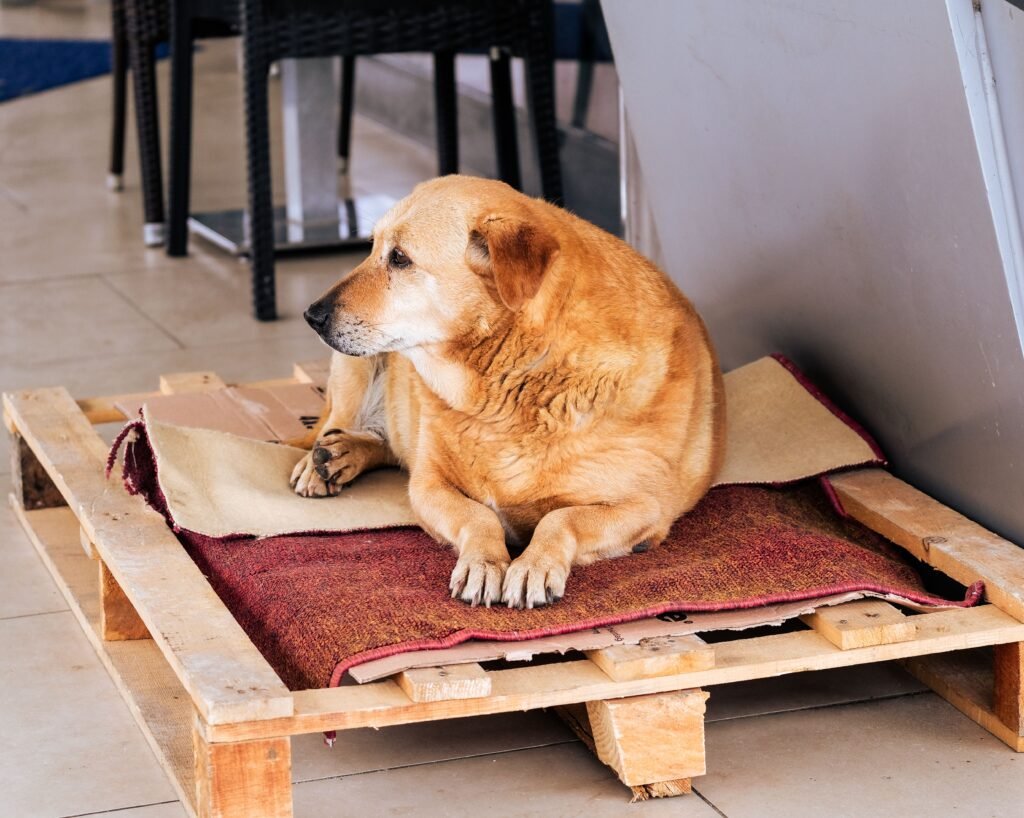
For many dogs, particularly puppies, the bedroom or an area near it is a practical nighttime location. Your dog remains close enough to hear that you’re nearby, and you can more easily notice when a puppy wakes and may need to go outside.
AKC’s current crate-training guide specifically says a crate used for resting and sleeping can be kept in a quiet part of the home and suggests locating a sleeping crate in or near the bedroom. See AKC: How to Crate Train Your Dog. If your bedroom is too small, don’t force the crate into a narrow gap. A quiet living-room corner or another nearby room may suit a dog that already settles comfortably on its own.
Whichever location you choose, consistency helps keep the routine straightforward. Also check that the overnight spot isn’t beside a heater, exposed to strong drafts or affected by temperature changes that aren’t obvious during the day.
Dog Crate Placement in a Very Small Home
When square footage is genuinely tight, your first goal should be reducing wasted surrounding space, not reducing the size of the crate your dog needs. Look at corners, wall edges and spaces beside existing furniture rather than the center of a room. Measure the crate door and tray clearance before rearranging anything. A location is much less efficient if you have to pull the entire crate away from the wall every time you clean it.
Think vertically around the room but not necessarily on top of the crate. Wall-mounted household storage elsewhere can free floor space around the crate without turning the crate itself into shelving. Also consider visual clutter. One appropriately sized crate beside a simple wall may look less intrusive than a smaller crate surrounded by baskets, toys, spare bedding and miscellaneous supplies.
If you use removable gates elsewhere in the home, storing them properly when they’re not needed can also recover useful floor and wall space. Our guide to where to store a dog gate when not in use covers compact options without confusing gate storage with crate placement.
The guiding rule is simple: don’t make the dog’s crate smaller to make the room feel larger. Make the room around the correct crate work harder.
Common Mistakes When Choosing a Dog Crate Location
Choosing the Smallest Gap
It’s easy to see an empty space and decide the crate belongs there. But if the crate door can’t open properly, the tray can’t be removed or surrounding furniture becomes inaccessible, the location isn’t genuinely efficient.
Forgetting About the Crate Size
Start with an appropriately sized crate and then choose the location. Don’t work backward by choosing a convenient space first and downsizing the crate to fit it. AKC’s crate-selection guide is a useful reference when checking crate types and sizing. See AKC: How to Choose the Best Crate for Your Dog.
Putting It in the Main Traffic Route
A hallway isn’t unused space if everyone walks through it twenty times a day. Look for alcoves and corners rather than narrowing the actual route through the house.
Hiding It Too Far Away
Trying to remove the crate completely from view can lead to unnecessarily isolated placement. A quiet corner of a normal living space often provides a better compromise.
Ignoring Changes Throughout the Day
Sunlight, room temperature, noise and household traffic aren’t constant. Check a potential location in the morning, afternoon and evening before deciding it’s ideal.
Blocking Access With Household Items
Don’t let the area become overflow storage. Keep the crate entrance, ventilation and surrounding floor clear.
Choosing Appearance Before Function
Furniture-style crates and coordinated crate corners can look attractive, but the dog’s space, security, ventilation and comfort come first.
Frequently Asked Questions
Where is the best place to put a dog crate in a small house?
A quiet corner of the living room, bedroom or home office is often the best starting point. Choose somewhere outside the main walkway where your dog can rest while remaining reasonably connected to household activity. Make sure the crate door and tray have enough clearance as well.
Is it OK to put a dog crate in the living room?
Yes. A quieter living-room corner can work very well, particularly for an adult dog that likes being near the household. Avoid positioning the crate directly beside loudspeakers, strong heat, prolonged direct sunlight or constant foot traffic.
Should a dog crate be in the bedroom at night?
It can be an excellent option, particularly for puppies or dogs that settle better near their owners. AKC specifically suggests that a sleeping crate may be positioned in or near the bedroom.
Can I put a dog crate under the stairs?
An open under-stair area may work if it provides sufficient height, ventilation and access. Avoid enclosed cupboards, cramped spaces or areas containing cleaning supplies and other hazards.
Can I move a dog crate between rooms?
Crates can be moved between rooms, including moving one to the bedroom at night. However, in a very small home, one consistent location may be easier if moving a large crate becomes part of your daily routine.
How much room should I leave around a dog crate?
There isn’t one universal clearance measurement because crates and room layouts vary. Leave enough space for ventilation, normal access, the crate door to open fully and any removable tray to slide out. Also check nearby drawers, cupboards and doors before committing to the position.
How can I make a dog crate take up less space?
You can’t reduce the crate’s necessary footprint without potentially compromising sizing, but you can make better use of the room around it. Put the crate against an unused wall or in a corner, integrate it beside existing furniture and reduce surrounding clutter. Measure access and door clearance so you don’t waste additional floor space.
Final Thoughts
Deciding where to put a dog crate in a small house is less about finding a clever hiding place and more about identifying the part of your home where an appropriately sized crate causes the least disruption. For many households, a quiet corner of the living room, bedroom or home office will be the strongest option. Open under-stair spaces and genuine hallway alcoves can also work when they provide adequate ventilation and don’t interfere with normal movement.
Measure more than the crate itself. Check its door, removable tray, surrounding furniture and the walking route through the room. Then consider the location throughout the day for sunlight, temperature and noise. A visible crate in the right corner is usually far more practical than a hidden crate squeezed into an unsuitable space. Give your dog the crate size they need, choose one safe permanent location where possible, and keep the surrounding area uncluttered. In a small home, that simple approach usually works better than trying to make the crate disappear.